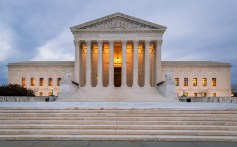
The major record labels are urging the U.S. Supreme Court to uphold their billion-dollar piracy lawsuit against Cox Communications, blasting the telecom giant for invoking “innocent grandmothers” in its appeal to the high court.
The massive copyright case — in which Universal Music Group (UMG), Sony Music Entertainment and Warner Music Group (WMG) won a $1 billion verdict in 2019 — saw a lower court hold Cox itself liable over allegations of widespread illegal downloading by its users.
Related
Billion-Dollar Music Piracy Ruling Threatens ‘Mass Evictions From The Internet,’ Supreme Court Told
Solange Appointed First Scholar-in-Residence at USC Thornton School of Music
Sia’s Estranged Husband Wants $260,000 Per Month to Maintain ‘Upper-Class Lifestyle’
After the justices agreed to tackle the case, Cox argued in August that the lawsuit “jeopardizes internet access for millions of users.” But in their own response on Wednesday (Oct. 15), the labels mocked Cox’s “breathless” warnings.
“While Cox waxes poetic about the centrality of internet access to modern life, it neglects to mention that it had no qualms about terminating 619,711 subscribers for nonpayment over the same period,” the labels wrote. “And while Cox stokes fears of innocent grandmothers and hospitals being tossed off the internet for someone else’s infringement, Cox put on zero evidence that any subscriber here fit that bill.”
UMG, Sony and WMG teamed up to sue Cox in 2018, arguing the broadband provider should be held liable for alleged widespread wrongdoing committed by its users. The labels said Cox had ignored hundreds of thousands of infringement notices and had never permanently terminated a single subscriber accused of stealing music.
ISPs are typically shielded from such claims by the Digital Millennium Copyright Act (DMCA), but a judge ruled that Cox had forfeited that protection by failing to terminate people who were repeatedly accused of piracy. With Cox stripped of immunity, jurors held the company liable in December 2019 for infringing 10,017 separate songs and awarded the labels more than $99,000 per song — adding up to a whopping $1 billion.
Related
Feds Urge SCOTUS to Tackle Billion-Dollar Music Lawsuit, Warning People Could Lose Internet Service
Last year, a federal appeals court ordered the award recalculated, ruling that aspects of the verdict were improper. But the appeals court also upheld other parts, and Cox is still facing the potential of a very large penalty when it is reissued.
In June, the Supreme Court granted Cox’s petition to review that ruling. That move came after the U.S. Department of Justice told the justices to do so, warning that the ruling against Cox could “cause numerous non-infringing users to lose their internet access.”
In its opening brief last month, Cox adopted a similar argument, warning that a ruling for the music companies might force ISPs to take aggressive measures against their subscribers out of fear of huge liability.
“If allowed to stand, the [lower court]’s one-two punch will yield mass evictions from the internet,” the company wrote. “ISPs confronting steep penalties will have no choice but to terminate the connections of homes, barracks, hospitals and hotels, upon bare accusation.”
Related
Music Publishers Can’t Add Lyric Piracy Claims to Anthropic AI Training Lawsuit
But in Wednesday’s response, the labels said those arguments “ignore the record and distort the law.” Far from random grandmas, the labels say Cox knew that the individual subscribers at issue in the case were breaking the law and chose not to terminate them because it “wanted to keep the money flowing in.”
“Cox made a deliberate and egregious decision to elevate its own profits over compliance with the law, supplying the means for massive copyright infringement to specific users that it knew were habitual offenders,” the labels write.
The case will be argued before the justices at some point in the next few months, with a ruling expected early next year.
Lil Wayne has scored a major victory in a long-running legal battle over whether he owed millions in fees to his former attorney.
Wayne (Dwayne Michael Carter Jr.) and lawyer Ron Sweeney have been facing off against each other in court for more than seven years over the status of a contingency fee arrangement, which originally entitled Sweeney to 10% of Wayne’s profits.
Related
Producer on Lil Wayne’s ‘Tha Carter III’ Settles UMG Royalties Lawsuit
Solange Appointed First Scholar-in-Residence at USC Thornton School of Music
Sia’s Estranged Husband Wants $260,000 Per Month to Maintain ‘Upper-Class Lifestyle’
The rapper first sued in 2019, claiming the 10% fee was an “exorbitant” amount that’s “double the customary rate for attorneys in the music industry.” Wayne said that because the agreement was verbal only and never signed, it became void as soon as he fired Sweeney in 2018.
Sweeney countersued Wayne, first in California and later in New York, claiming the fee should be enforced. The lawyer said he was due $20 million from deals that went through after his termination, including Wayne’s confidential royalty settlement with Cash Money Records and an alleged sale of Young Money master recordings to Universal Music Group (UMG).
A New York judge sided with Wayne on Tuesday (Oct. 14), ruling that Sweeney isn’t owed 10% on any money that came through after he was fired.
“Counterclaim plaintiffs may not, under [the law], receive a contingency fee, as contemplated by the voided oral contingency fee arrangement or otherwise,” wrote Judge James D’Auguste. “Accordingly, they are not entitled to discovery regarding the monies received by Carter in connection with the master recordings sale and Cash Money/Universal settlements.”
Related
Rod Wave Countersues After $27M Tour Lawsuit: Promoter Is Trying to Force ‘Indentured Servitude’
According to the judge, Sweeney can only pursue “reasonable fees” from Wayne. The question of what constitutes reasonable fees will now move forward into evidence discovery, with Sweeney still seeking many millions. Wayne maintains that Sweeney is owed nothing because the lawyer was actually overpaid during their 13 years working together.
Wayne’s attorney, Jonathan Davis, celebrated the ruling in a statement to Billboard on Thursday (Oct. 16).
“After an almost seven-year battle in multiple courts in New York and California, lawyers can rest a little easier in knowing that the rule of law still matters and will be applied faithfully by courts,” said Davis. “Mr. Carter is thankful to Justice d’Auguste for his significant decision against Ron Sweeney and his company.”
Reps for Sweeney did not immediately return a request for comment.
A collection of remixes of Daft Punk‘s third album Human After All are set to be released on vinyl for the first time ever.
The project will be released on Nov. 28 as a double album, with pre-sales open now.
Related
Fortnite’s Daft Punk Experience to Feature 31 Songs From the Duo
A New Collection of Daft Punk Merch Just Dropped: See Some of the Standout Items
Dua Lipa Covers Daft Punk’s ‘Get Lucky’ at Radical Optimism Tour Stop in France
The project marks the 20-year anniversary of Human After All, which hit No. 98 on the Billboard 200 in April of 2005. The year after its release, a collection of remixes by Daft Punk associates and peers including Justice, Soulwax and SebastiAn were released on CD exclusively in Japan.
In 2014, another batch of Human After All remixes by artists including Basement Jaxx and The Juan Maclean also came out, with the entire collection added to streaming services that same year. With some tracks being remixed more than once, the collection then added to DSPs and now being released on vinyl now features 15 tracks.
Made in just six months, Human After All followed 2001’s Discovery, with the French duo then not releasing another studio album until 2013’s Random Access Memories.
Human After All Remixes Tracklist:
A1 Robot Rock (Soulwax Remix) A2 Human After All (SebastiAn Remix) A3 Technologic (Peaches No Logic Remix) A4 The Brainwasher (Erol Alkan’s Horrorhouse Dub) B1 The Prime Time Of Your Life (Para One Remix) B2 Human After All (“Guy-Man After All” Justice Remix) B3 Technologic (Digitalism Remix) B4 Human After All (Emperor Machine Version) C1 Technologic (Vitalic Remix) C2 Robot Rock (Daft Punk Maximum Overdrive Mix) C3 Technologic (Liquid Twins Remix) C4 Technologic (Basement Jaxx Kontrol Mixx) D1 Human After All (The Juan Maclean Remix) D2 Human After All (Alter Ego Remix) D3 Technologic (Knight Club Remix)
All products and services featured are independently chosen by editors. However, Billboard may receive a commission on orders placed through its retail links, and the retailer may receive certain auditable data for accounting purposes.
When did wired earbuds become cool again? From Harry Styles to Charli XCX, stars have been spotted ditching their wireless earbuds in favor of being tethered to their phones, and it seems the previously-dated look is now an instant status symbol.
Model and influencer Romeo Beckham recently posted photos of himself using the wired earphones while getting ready for Fashion Week. And Dua Lipa revealed that she keeps not one, but three pairs of wired earbuds with her at all times.
Of course there are many reasons why wired earbuds are better than wireless ones: for starters, they’re less likely to fall out of your ears and disappear into some crack or crevice on the road, or on your commute. Many people also find them more comfortable, since they’re pretty “locked in” to your ears rather than dangling from your lobes precariously.
Wired earbuds are also better for sound quality, owing to the direct connection to your music source rather than relying on Bluetooth pairing. Dropped calls or music fading in and out? That’s not a problem with wired earbuds (well… at least not dropped calls due to phone pairing issues). And wired earbuds never require a battery source or charging, since they plug directly into your phone. Wireless earbuds require you to keep them charged or carry them in an accompanying charging case.
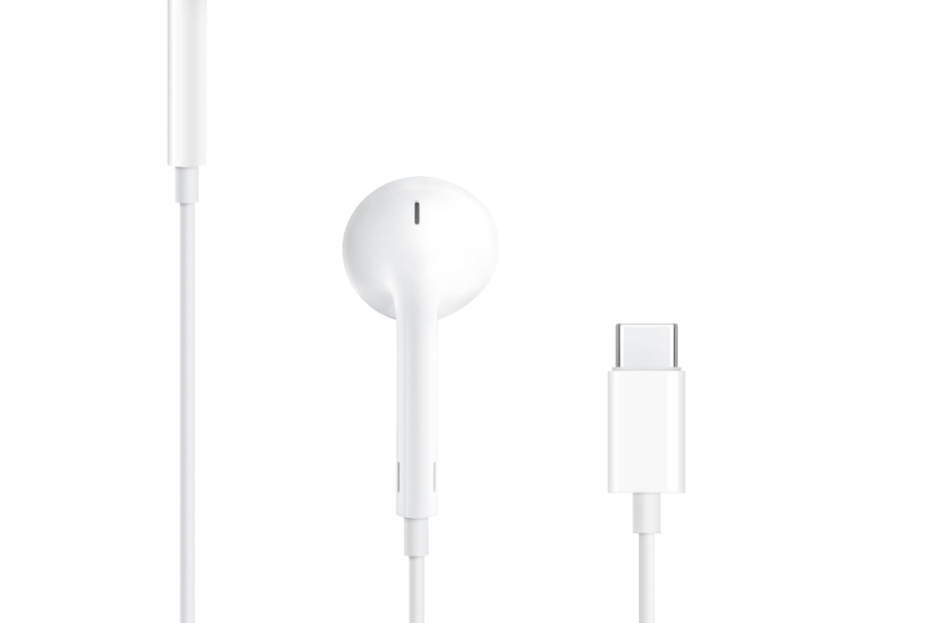
Of course, wired earbuds (and wired headphones) saw a decline in popularity a few years ago when cell phone providers got rid of the headphone jack on most units. But you can now find wired earphones with USB-C connections, including the popular Apple Earbuds (seen above). The USB-C plug lets you easily affix your earbuds to your phone, using the same slot you would use for charging.
Apple’s official wired earbuds are dubbed the “EarPods” (get it? Compared to the Bluetooth AirPods?) and they feature two ergonomic earbuds attached to an approximately three-foot cord. The cord has a built-in remote that lets you adjust the volume, change songs and even answer calls with just the push of a button.
It’s not just for listening to music or watching videos — Apple says the EarPods have a built-in microphone that automatically focuses on your voice when you’re on a call, so you always come in loud and clear. Amazon says more than 10,000 shoppers have picked up these buds in the last few weeks alone — another sign of the wired comeback.
The Apple EarPods with USB-C connection support iPhone models 15 and up. Have an older phone and still want to connect with a pair of wired earbuds? Pick up the EarPods with a lightning cable connection above. It has all the same features as the USB-C pair, only with a different plug-in tip.
You can also find an Apple EarPods alternative on Amazon, with these USB-C wired earphones above, which are compatible with both iOs and Android devices. This pair also comes with a mini remote control plus three eartip sizes to help you find your most comfortable fit.
There is one annoying issue with wired earbuds — the dangling cords. Without a charging case to tuck your earbuds into, the cords can quickly become a tangled mess in your pockets or bags. Fortunately, you can pick up a basic cord organizer or earphone wrap, like the one from Amazon below.
Sombr supplants himself at No. 1 on Billboard’s Hot Rock & Alternative Songs chart, rising to the top of the Oct. 18-dated list with “Back to Friends.”
The second leader on the list for the 20-year-old New York native (born Shane Boose) assumes the top spot from his own “Undressed,” which ruled for six weeks and falls to No. 3 on the latest ranking.
Related
Alex Warren, Sombr and 335 More Rising Stars Appear on 2026 Grammy Entry List for Best New Artist
Sombr Makes VMAs Debut With Blazing Two-Song Medley at 2025 Awards
Doechii Slays Mash-Up of Charli xcx’s ‘360’ & ‘Persuasive’ at ‘Live From the Swamp’ Tour Kick-Off
In the week ending Oct. 9, “Back to Friends” drew 11.8 million official U.S. streams and 14.5 million radio audience impressions and sold 1,000, according to Luminate.
Sombr is also the first act to replace itself at No. 1 on Hot Rock & Alternative Songs since Panic! at the Disco, which traded off between “High Hopes” and “Hey Look Ma, I Made It,” first on the July 6, 2019, chart and again that Sept. 21. He is the first soloist to achieve the feat.
The last two weeks have featured three sombr songs in the chart’s top five; “12 to 12” concurrently spends its second week at its No. 5 high.
“Back to Friends” also takes over at No. 1 on the Hot Rock Songs and Hot Alternative Songs charts. “Undressed” ruled the latter for the last six weeks and the former for the preceding nine.
“Back to Friends” continues making pop radio gains, reaching new highs of No. 18 on Adult Pop Airplay and No. 21 on Pop Airplay. It dominated Alternative Airplay for five weeks beginning in June. “Undressed” hit No. 4 on both pop tallies in August-September and No. 29 on Alternative Airplay in August. “12 to 12” jumps to a new No. 24 best on the latest Alternative Airplay chart.
All three songs, which sombr solely wrote, are on I Barely Know Her, his debut full-length. The set led Top Rock & Alternative Albums for two weeks (Sept. 13, 20) and has earned 517,000 equivalent album units to date.
Attorneys for Tim Leiweke are asking for more time to prepare the defense of the former Oak View Group (OVG) chief executive and arena developer in his federal criminal trial in Austin.
Criminal defense attorney David Gerger filed an 11-page motion on Friday (Oct. 10), requesting that presiding Judge Susan Hightower postpone the December 2025 trial date to at least October 2026. Gerger argues that Leiweke’s legal team needs additional time to review roughly seven million pages of evidence produced by the government.
Related
Tim Leiweke Indictment: How the ASM/Legends Merger Led to Charges Against the OVG CEO
Solange Appointed First Scholar-in-Residence at USC Thornton School of Music
Sia’s Estranged Husband Wants $260,000 Per Month to Maintain ‘Upper-Class Lifestyle’
The filing also outlines what could be Leiweke’s early strategy to have the Department of Justice’s case dismissed, claiming prosecutors are misapplying the law in what the defense calls a misguided prosecution of an accomplished arena executive.
On July 9, the DOJ’s Antitrust Division unsealed an indictment accusing Leiweke and the leadership of Legends Hospitality of conspiring to rig a bid to develop the Moody Center in Austin for the University of Texas. Prosecutors allege Leiweke colluded with then-Legends CEO Shervin Mirhashemi to prevent Legends — partly owned by Dallas Cowboys owner Jerry Jones — from submitting a competing bid for the arena project.
OVG agreed to pay a $15 million penalty under a non-prosecution agreement, while Legends agreed to pay $1.5 million. Leiweke faces a single charge of violating Section 1 of the Sherman Act, which carries a maximum sentence of 10 years in prison and a $1 million fine.
“We say that is not true; that OVG won the contract by competition, not collusion, and provided a world-class arena at excellent terms for the University,” Gerger writes. He argues that OVG “could not itself provide all the services needed to build and operate the arena, so it had to put together a team. Legends was not an arena developer but wanted to provide certain services to the arena such as food and beverage concession stands.”
Related
Why OVG’s Bid-Rigging Settlement Included Ticketmaster — And What It Could Mean for DOJ’s Live Nation Case
That distinction is key, Gerger continues, maintaining that Legends was not a competitor to OVG in 2017. “Even Legends has told DOJ that it was not in the arena development business during the relevant time,” he writes, noting that Mirhashemi testified before a grand jury that “Legends would support the development-led bid for this project by OVG in lieu of supporting and providing services for another developer’s bid.”
“According to the government, an arena developer may not agree that its ‘teammates’ or subcontractors will support its team and not join another ‘team’ to bid against it: that is an unlawful ‘restraint,’” Gerger writes. “Our research shows that theory is wrong on the law, and courts have rejected such ‘literal’ readings of the Sherman Act as ‘overly simplistic.’”
Gerger also points to a 2024 DOJ review of AEG’s sale of ASM Global to Legends, during which a Legends attorney reportedly described the University of Texas deal as “lawful” and “an appropriate business practice.”
Regarding the requested trial postponement, Gerger said he’s unsurprised the government is “ready for trial,” writing, “It should be — it investigated this case for over two years and then decided when to bring an indictment.”
“In sum, discovery is voluminous and ongoing, and the defense needs more time to review it — and time to follow leads,” Gerger continued. “There is no way to accomplish this — and file motions and prepare for trial — on the schedule proposed by the government.”
A DOJ representative did not respond to Billboard’s request for comment by press time.