Black music is the foundation of so much of what we hear, feel, and move to in modern music. It’s more than a sound — it’s a force that has shaped culture, built community and told the stories that often go unheard. Whether within R&B, hip-hop, dancehall, gospel, country, or afrobeats, Black music has always been a channel for truth, joy, pain and resilience. It’s the soundtrack of the Black experience, but its impact has never been limited to just one community; Black music moves the entire world.
For Black Music Month, Billboard wanted to go deeper than the charts, the viral hits and the well-known milestones. We wanted to know what Black music really means, on a personal level. So Billboard asked a range of artists — from veterans like Ne-Yo and Machel Montano, to breakout stars like Kehlani, Ice Spice, GIVĒON and Shenseea, to rising voices like Destin Conrad, BRELAND, J.P., Mickey Guyton, Lila Iké and FLO — to reflect on three simple but powerful questions: What does Black music mean to you? Why is Black music so important? And, how has Black music shaped your life or career?
The answers we received were personal, passionate and deeply honest. Some artists spoke about growing up surrounded by the sounds of church choirs or reggae legends. Others reflected on how Black music gave them the freedom to express themselves without limits. Together, their voices remind us that Black music isn’t just a genre—it’s a legacy. It’s a lifeline. And it’s still writing its story every single day.
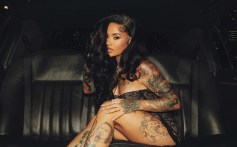
Kehlani endured innumerable struggles and beat the odds “all before the age of even being able to buy a f—king drink at a bar,” as she said with her raspy, hushed voice in the “Intro” of her 2015 sophomore mixtape You Should Be Here.
She was raised by her aunt, who eventually adopted Kehlani, after her father died when she was a toddler and her mother served time in jail while struggling with drug addiction. She left PopLyfe, the Oakland-based teen pop band that finished in fourth place on America’s Got Talent in 2011, due to managerial and contractual issues. She stole iPhones straight out of people’s hands at train stations and sold them — and got banned from Walmart for stealing clothes and food — just to skate by, according to her 2015 Fader cover story. And she poured that grit and resilience that’s carried her throughout her entire life into her music.
In 2014, they independently released their critically acclaimed debut mixtape Cloud 19, which led to a label deal with Atlantic Records. By the time they were working on their follow-up project, they got to indulge in the one grown-up activity they hadn’t been able to before.
Then-19-year-old Kehlani still wasn’t “able to buy a f—king drink at a bar” in the U.S., but she could in Vancouver in British Columbia, Canada, where she went with her righthand producer Jahaan Sweet and photographer David Camarena. “I thought I was big shit because I was of legal age,” she tells Billboard, recalling her “first experience of being out of the country and working in an Airbnb and leaving the Airbnb to go get a drink at a bar and listen to the music walking down the street. [It was] this freeing feeling of this is what I can do as an artist. This is the kind of life I can have where I can get up and go, get inspiration and create in another place, and make art in this freeing way.”
Related
Queer Jams of the Week: New Music From Kehlani, Kevin Abstract, Blondshell & More
06/13/2025
On You Should Be Here, Kehlani navigates their romantic and familial relationships through the lens of a charming and vulnerable young woman taking her life by the reins – and a lifelong student of ‘90s R&B and neo-soul. The tape reassures her fans, known as the Tsunami Mob — as well as Kehlani herself — to never lose sight of the light at the end of the tunnel, even when it seems incredibly dim. And her inextinguishable pursuit was rewarding as the spotlight shined even brighter on the burgeoning star.
You Should Be Here earned Kehlani their first top five project on Top R&B/Hip-Hop Albums as well as their first Grammy nomination for best urban contemporary album. “I was told there hadn’t been a mixtape nominated for a Grammy, and if there was, then I was the first girl. It was a pivotal moment, any moment that lets you know that the level of how you believe in yourself is valid,” they says.
As part of Black Music Month, Billboard is celebrating the 10-year anniversary of You Should Be Here with Kehlani, discussing what the mixtape meant to them at the time of recording it, continuing to show love to Musiq Soulchild, feeling “haunted” by their videotaped reaction to their first Grammy nomination, and if they’ll ever bring back that one song that’s been removed.
What do you remember most about recording You Should Be Here?
How natural it was. Me and Jahaan were living together at the time in all these Airbnbs. We were in any living room we could find. That was such a crazy project because it was right after my first mixtape ever, which changed my life. It was me making music the first year out of my teenagehood and the first year of me cracking off as an artist. There was so much context in there of how that shaped my relationships, my view of the world, my young womanhood. That was in response to my life at the time.
Sweet produced six songs on the mixtape. What was your working relationship with him like at the time? Considering he later worked on your 2017 debut album SweetSexySavage, why was he such a crucial member of your inner creative circle?
We did a lot of Cloud 19 together. We did what I felt like was my first breakthrough song, “Get Away.” We both had this underdog feeling because when I met Jahaan, he was an assistant at a studio and I was there working with someone else. After the session ended, Jahaan came in the room and was like, “Hi, you don’t know me. I’m like the little guy here. I have a beat to play you if you’d be down to listen.” And I’m like, “Well, I’m a little guy. [Laughs.] Absolutely play me the beat.” And it ended up being my first breakout song.
We’ve just had that kindred relationship where we were really hungry and we felt like we had something to prove, but we also had chemistry where we’d finish each other’s musical sentences. He’d know what I’d want to do next and where I’d want to take it, and before I would even get a chance to do it, he would already be tweaking the beat to how I’d probably like it.
Around the time you released this mixtape, different publications were labeling you a “mindie” artist. Did that term resonate with you?
I kind of still, to this day, feel like a mindie artist. That’s nothing to do with the label, more to do with the era that I came up in. I was a part of the pre-streaming service [era]. You have to go hard for yourself. You can’t wait for a marketing strategy or rollout. It’s all about the relationship that you have with your fans personally, with no middleman. I’ve always operated in that way. My fanbase [grew] up with me, they feel like they know me, which is a double-edged sword in this day and age. We have a really deep connection where they feel proud to be here this long and every time a milestone happens, and they’re excited about things that are beyond where’s the next hit? Are the numbers moving in this kind of way? That comes from that mindie movement.
Light shines through as a key lyrical theme in You Should Be Here. You sing “So be great, be kind/ Don’t let them dim your light/ A woman like the sun should always stay bright” on “Bright.” And you sing, “Too damn strong/ To let you get the best of me/ Took way too long/ To find the light inside of me” on “N—as.” Why was that an important message for you to share with your fans on this mixtape?
I’ve dealt with chemical imbalance and mental illness my entire life, so it’s been up and down. Anybody with mental health issues knows how imperative that moment that your light returns is and how much of a big deal it is. It’s not, “I felt sad yesterday and I’m coming around today.” It’s these time periods where you do not feel like there’s any sort of light at the end of anything.
And when you finally get that back, the measures you take to ensure that it stays, whether your boundaries change or your routine changes or you have to let certain things or people go, it’s a big feat. That was the beginning of my life shifting in that way where I had to make those changes to prioritize the light that I found. Those were the first years of my life with stability and with control over my own life. Everything was shifting, and I finally had a grip on it. I just needed to protect it.
Speaking of “N—as,” you removed the track from all streaming services in 2023. Would you ever put it back on streaming for the fans who miss it?
At this point, I’m not really interested in bringing it back for myself. I’ve always said if there’s another artist who would like to put it out because people want the song in the world, I’d be more than happy to let another artist record it and let them have it. Other than that, at the time I took it down, I was being communally called in by people who felt offended by it, and I was abiding by what I feel like community care is, which is when you’re called in, you listen and you make a change. I try to keep my peace as much as possible, and I feel like re-putting it out on any platforms at this point would be another ignited thing beyond what my focus is at the moment.
You contributed background vocals to Chance the Rapper and The Social Experiment’s “Lady Friend” the same year you featured him on “The Way.” How did you two establish that relationship?
Me and Chance go back to that golden era of earlier music from our late teenagehood and early young adulthood where it was me, Chance, Bryson [Tiller], Jhené [Aiko], Tinashe. It was this early group of us that were still dropping things on SoundCloud. We were all tapped in with each other. We’re in that space of innovation is starting to happen, which I don’t know if we realized that at the time, but now I can look back and be like, “Oh, that was the beginning of certain ways that music moves now.” Me and Chance have always had a great friendship and continue to do so.
“Down For You,” featuring BJ The Chicago Kid, interpolates Musiq Soulchild’s “Just Friends (Sunny).” Four years later, you featured Musiq Soulchild on “Footsteps,” the opening track of While We Wait. How did you finesse that? Did you two ever talk about “Down For You”?
Oh, he knows I’m a fan. I not only interpolated him on that, but on the mixtape before, I quoted him. It went from quoting to interpolating to the feature. He’s always known from even the first moment. I don’t care about coming off like a fan to anybody in anything that I’m a fan of. [Laughs] I always was loudly like, “You’re my favorite. Growing up, you were my favorite. You’ll always be my favorite.” He knows very well. I will get down on the floor and bow to that man.
What was your favorite song from You Should Be Here in 2015, and is it still your favorite off the project a decade later?
“Jealous.” I just remember the excitement of discovering Lexii and how it was to hear Lexii for the first time on her SoundCloud. I remember being in a sprinter van with my manager and being like, “Yo, there’s this girl from Minnesota and she’s so hard. We need her on the album.” And she just knocked out that verse so quickly, and I just became a super Lexii Alijai stan because of it. To this day, it’s one of my favorites that I’ve done because of the energy that she brought to it. That is my favorite now because of sentimental reasons. Rest in peace, Lexii.
At the time, my favorite song was probably “You Should Be Here” because it felt like a declaration. I had just got out of my first adult relationship, and that person broke up with me because of the trajectory I was in and there were some issues around that. It felt like this big catalyst into, “Oh, this is shit is real.” And it awoken all the feelings of I really need to anaylze how my life is shifting.
You just turned 30 in April. If you could talk to the 19-going-on-20-year-old version of Kehlani who was making You Should Be Here, what would you tell them?
I would say your life’s about to change. The art that you’re making is going to have big cultural significance that gets a lot of people to relate to you because of your story, your upbringing, your background, your emotional journey. It’s going to bring a lot of those people who need it to the forefront, but also don’t take that on as your own. Lock in, focus on your relationship with God and perfect your craft. Take your time and have fun.
Once You Should Be Here came around, I was in go mode — and it was such a detrimental thing to my mental health, because life really took off after that. We got the Grammy nom, it started getting really psycho insane, and I spent a lot of years working myself to burn out — and taking on the fact that all these people were like, “You changed my life, You saved me.” It was a heavy weight to carry at 19, 20. I was also growing up in front of the world. So I would want to hear from myself now that I owed it to myself to really prioritize my mental well-being while I’m giving these things to the world.
You embarked on your first-ever solo headlining tour, the You Should Be Here Tour, after the tape dropped. But earlier that year, you went with G-Eazy on the second leg of his From the Bay to the Universe Tour. What lessons had you learned from that joint stint that helped you during your first solo run?
I will always thank G-Eazy for being the first person to take me on the road and open the lane for me like that. He’s so incredible, because he’s done that for almost every single Bay Area artist. Like, every Bay Area artist who has come out of the Bay that has been after his time, he’s brought on tour. He’s opened the door for all of us in that way. It was a very different tour than what an R&B tour would look like. It was very rock star. I’m like, “This what a tour bus is? This what backstage looks like? This some rock star s–t.” It allowed me to see the epicness before I had to go and take on all those responsibilities myself.
It’s different when you’re an opener. You just get to go on stage and then watch someone every night. I got to see what a show with production looked like, and a show that had a set and real lights. And then I went on my first tour, and I didn’t have any of those things — but it gave me something to look forward to and something to be excited about, like, “Oh, I can do this. This is possible.”
You earned your first-ever Grammy nomination with this mixtape. Do you remember how you felt when you found out?
What’s funny is I am so haunted by the video where I found out. There’s literally a video where I’m running around screaming outside of the tour bus. I think we were in Sweden. I had some acne [laughs] on my cheek, and I put tea tree oil on it, and I burnt the shit out of my face. So I’m sitting there holding my face while I just chemically burned it, and David [Ali] tells me the information, and I start losing my mind with the switch from “Holy s–t, I’m crying because I just burnt my face” to “Holy s–t, I’m crying because I’m nominated for a Grammy off of a f—king mixtape.” It was f—king hilarious.
I was told it hadn’t been done before that. I was told there hadn’t been a mixtape nominated for a Grammy, and if there was, then I was the first girl. It was a pivotal moment — any moment that lets you know that the level of how you believe in yourself is valid. I’m not big [on letting] any award validate how great your art is. But it’s nice when the system in place or the hierarchy of what you’re doing in art recognizes that what you’re doing is great. It feels good, even if you don’t believe in it.
What did You Should Be Here mean to you at the time of recording it, and looking back at your discography, what does You Should Be Here mean to you now?
At the time I recorded it, I was just a hungry 19-year-old trying to follow up the splash that my first project made, trying to get my emotions down, trying to explain myself, trying to get people to feel me. Looking back at it now, I’m grateful that I was down to bare myself in that way and I was down to be emotional and vulnerable. I’m grateful that it changed my life. It really did. It was the project that was the first change of my life as far as musical pivots, and there would be no project after that without what You Should Be Here opened up for me.
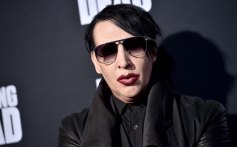
While Marilyn Manson is currently scheduled to kick off the European leg of his One Assassination Under God tour in Brighton, England, this October, a senior member of Parliament is urging local officials to cancel the show.
Related
A Timeline of Abuse Allegations Against Marilyn Manson
01/24/2025
Earlier this month, senior MP Siân Berry penned an open letter to Brighton and Hove City Council leader Councillor Bella Sankey, asking her and the council to cancel Manson’s upcoming performance at the city-owned Brighton Centre on Oct. 29. In her letter, Berry cites the “multiple allegations of sexual assault, grooming and domestic violence” leveled against Manson over the last few years.
Manson — whose offstage name is Brian Warner — was named by actress Evan Rachel Wood as her alleged sexual abuser in February 2021, leading to more women coming forward and sharing similar stories of alleged abuse from Manson. A number of women have filed suit against Manson for alleged abuses ranging from sexual assault, harassment and grooming. The shock rocker has denied all allegations.
In her open letter, Berry detailed immediate concerns she shares with her co-signees, including that the show’s age restrictions “means children as young as 14 can attend.” While she acknowledged that prosecutors in Los Angeles announced in January that Manson won’t face criminal charges due to the expiration of the statute of limitations on domestic violence charges, she added multiple policies the city council could use to justify canceling Manson’s performance, including a 2024 document from the city saying the council was “committed to listening and responding to the needs of survivors in our city.”
“Many survivors in Brighton and Hove, and organizations supporting them, will have very serious concerns about this booking and its impact on other people visiting the city centre, local residents and the wider community,” Berry wrote. “Freedom of expression is an important principle that should be defended, including in relation to artists, but there is an obvious risk to community cohesion and the council has separate equalities obligations to foster good relations between people who share protected characteristics and people who do not share them.”
Berry added that members of the cabinet previously acknowledged that the performance was “problematic,” but said they would not consider canceling the show. She still urged them to reconsider.
“The level and nature of the accusations against Warner are concerning enough alone, but so too is the message sent out by providing a platform for this individual, at our city’s biggest publicly owned venue, and what this will mean to survivors,” she said. “We believe a solution must be found and that, despite these difficulties, the Council should act in line with its obligations to our values and the serious concerns around public safety and community cohesion.”
Billboard has reached out to Manson’s representatives for comment. Read Berry’s full open letter on her website.
Stories about sexual assault allegations can be traumatizing for survivors of sexual assault. If you or anyone you know needs support, you can reach out to the Rape, Abuse & Incest National Network (RAINN). The organization provides free, confidential support to sexual assault victims. Call RAINN’s National Sexual Assault Hotline (800.656.HOPE) or visit the anti-sexual violence organization’s websitefor more information.
In 2019, 16-year-old rapper Lil Tecca had one of the year’s biggest breakout hits with the No. 4-peaking Billboard Hot 100 smash “Ransom,” a fun hip-pop single with an eye-catching Lyrical Lemonade music video. It was Tecca’s first top 10 hit, and to date, still his last, as the rapper would not even reach the Hot 100’s top half again for the next half-decade.
But while Tecca has still yet to match the crossover success of his first big hit, he’s hardly faded away from the mainstream — he reached the Hot 100 a dozen times total before 2025, and made the top 10 of the Billboard 200 with four of his first five albums (2023’s No. 11-peaking TEC being the lone exception). And in 2025, he confirmed he was still a vital hitmaker with the Neptunes-reminiscent “Dark Thoughts” (reaching No. 28 on the Hot 100) and the Buggles-sampling “OWA OWA” (No. 50) — and now, he’s also got the highest-charting album of his career with those songs’ parent set, the No. 3-bowing Dopamine.
How did Tecca maintain and grow his early success? And what rap peers of his could follow a similar trajectory? Billboard staffers answer these questions and more below.
1. Lil Tecca reaches a career-best peak of No. 3 on the Billboard 200 this week with Dopamine, moving 48,000 units in its first week. On a scale from 1-10, how surprising is this first-week performance to you?
Kyle Denis: Maybe around a 6. If you’ve been paying attention to Lil Tecca’s recent momentum, especially around his pre-release singles like “Dark Thoughts” and “Owa Owa,” these numbers aren’t too surprising.
Angel Diaz: I guess I would say a 3? You hear “Dark Thoughs” and “OWA OWA” everywhere. I’m more surprised that he didn’t push more units. Those tracks have gotten a lot of traction since he released them, and he and his team even decided to make them the first two songs on the album.
Jason Lipshutz: A 4. If you’ve been paying attention to the streaming success of Dopamine singles “Dark Thoughts” and “OWA OWA” over the past few months, you would have assumed that Lil Tecca’s latest project could become his highest-charting album to date, even if nothing else from the album immediately took off with hip-hop listeners. “Ransom” was a bigger chart hit for Tecca, but the longevity of his latest hits, particularly “Dark Thoughts,” has been impressive, and suggested a wider interest in the New York rapper that helped him land a No. 3 debut.
Michael Saponara: I’d probably say about a 5. He notched a top 10 album and 40k-plus first-week sales with PLAN A last year, so I figured he’d continue to build on that trajectory, but adding a top five album to his resume and reaching No. 1 on the Top Rap Albums chart are nice feathers in the cap for Tecca with Dopamine.
Andrew Unterberger: 5 sounds right. It’d have been higher for me at the start of the year, but after the two advance hits, it was clear Tecca was going to have greater juice this time around. A No. 3 debut is still around the high end of what I might have predicted, though.
2. Before this album’s release, “Dark Thoughts” and “OWA OWA” had already brought Tecca back to the Hot 100’s top half for the first time since his “Ransom” breakthrough six years ago – which of the two songs do you find more interesting from him at this point in his career?
Kyle Denis: I find most “Video Killed the Radio Star” samples incredibly derivative, so I’ll go with “Dark Thoughts,” which interestingly positions Tecca as a straight-up pop-rapper with a gifted ear for hooks. We knew that ear was there from “Ransom,” but hearing him float over Neptunes-lite production opens up a world of possibility for where he goes on the next album.
Angel Diaz: I think both are two of the most interesting songs he’s made up until this point of his career — but I’m going to go with “OWA OWA” here because “Video Killed the Radio Star” sample is top of mind for me. I recently finally got a chance to watch the Yacht Rock documentary on HBO Max — where they talk about the advent of MTV and music videos having a hand in ending the subgenre’s run — and “Video” was, appropriately, the first clip the channel ever played.
Jason Lipshutz: “OWA OWA” boasts a smart, pretty unexpected Buggles sample, but “Dark Thoughts” is the more complete song, as a stellar homage to the Neptunes’ sunnier early-00s masterworks that lets Tecca shine within the track’s melodic pockets. The whole affair beams with confidence, and nicely toes the line between old-school beat-making and more modern sing-rapping. And while both hits clock in at two minutes and change, “Dark Thoughts” has listeners reaching for the replay button more quickly.
Michael Saponara: “OWA OWA” boasts a smart, pretty unexpected Buggles sample, but “Dark Thoughts” is the more complete song, as a stellar homage to the Neptunes’ sunnier early-00s masterworks that lets Tecca shine within the track’s melodic pockets. The whole affair beams with confidence, and nicely toes the line between old-school beat-making and more modern sing-rapping. And while both hits clock in at two minutes and change, “Dark Thoughts” has listeners reaching for the replay button more quickly.
Andrew Unterberger: Definitely “Dark Thoughts.” It’s one of the most engaging pop songs of the year, and I love how in an era of void-skewing hip-hop singles, “Dark Thoughts” is actually a misdirection of a title for what’s a relatively upbeat single. Besides, Nicki Minaj and will.i.am already got to that “Video Killed the Radio Star” hook 15 years ago.
3. Many of Tecca’s peer rappers from his turn-of-the-decade breakthrough period have since fallen on hard times commercially. What do you think about him has allowed him to stay relevant and reach new heights this far into his career?
Kyle Denis: I’d say it’s probably a combination of his consistency (he’s dropped five albums in five years!) and willingness to experiment and expand his sounds. Several of his peers might have balked at the top 40-facing production of “Dark Thoughts,” but Tecca embraced it without sacrificing his idiosyncrasies. Through that embrace, he found a really interesting pocket for himself across Dopamine, one that certainly sets him apart from his class from a sonic standpoint.
Angel Diaz: I think he’s been able to keep a core audience and the pop leanings on this recent project will certainly gain him some new ones. You gotta remember that each of his five albums debuted within the Top 15 of the Billboard 200 and his 2019 mixtape We Love You Tecca debuted at No. 4. The kid has a loyal fanbase and he just delivered the best project of his young career.
Jason Lipshutz: Sometimes, it just takes enough swings of the bat to connect on the right stylistic evolution. Tecca has been consistently releasing projects over the past half-decade, and has explored different approaches to modern hip-hop across all of them — he’s still only 22 years old, and his youthful restlessness as an artist has served him well. “Dark Thoughts” and “OWA OWA” sound nothing like “Ransom,” but they were the right songs to connect with a wider audience, coming from an artist who’s been able to reinvent himself and still maintain a sizable listenership.
Michael Saponara: I think Tecca’s been able to organically build a fan base that will ride for him while his songwriting and sound mature throughout his 20s. We’ve seen so many artists explode onto the scene with a massive hit and then quickly fizzle out because listeners were fans of a song rather than them. So Tecca deserves a ton of credit for being able to build off of “Ransom” and cement himself as a fixture in rap.
Andrew Unterberger: Hooks help! The main thing that “Ransom” and “Dark Thoughts” have in common is a chorus that sounds good, feels good and gets stuck in your head randomly. Tecca certainly knows his way around a refrain that’s clever, melodic and hooky — and that’s part of the hitmaking process that far too many rappers tend to wave off as incidental in 2025.
4. Now that Tecca has reached a new commercial peak, what kind of career move(s) would you advise him to make next?
Kyle Denis: I’d love to see him hop on some other tracks, while continuing to prioritize pushing “Dark Thoughts.” With some diligence, the right timing, and a remix – Role Model could be a fun left-field choice, but a Doechii remix is probably the right call — “Dark Thoughts” could be Tecca’s first Hot 100 top 10 hit since “Ransom.” I’d also advise him to get a North American tour ready for the fall, or at least hop on a bigger artist’s trek – maybe he tags along with Wayne & Co.?
Angel Diaz: Keep exploring production that uses unexpected samples. Magic always comes when you blend genres. To quote the great Steve Porcaro who was quoting someone else in that Yacht Rock documentary that I can’t recall at the moment – I think it was his late brother Jeff – but Tecca must always keep in mind that “the groove is a delicate thing.”
Jason Lipshutz: Keep exploring, Tecca! Dopamine contains traces of the flow and production that he utilized on “Dark Thoughts,” but also toys around with dance, pop, trap and rage music, turning into a 41-minute listen that flies by without ever growing stale or repeating itself. Tecca’s adventurousness has been his greatest asset as a popular hip-hop artist, and has helped score his latest hit singles — he should protect that instinct.
Michael Saponara: I would say to continue doing what he’s doing because it’s working. With two albums in less than a year, maybe take the foot off the gas for a little while to make people miss you. Whenever he does return, I’d like to see him take a major swing at a commercial smash hit, while collaborating with a rap titan in the lane of Playboi Carti, Young Thug and Future.
Andrew Unterberger: Look for more crossover opportunities! I don’t mean to just accept every feature/remix opportunity you’re offered — or to start being craven in your own offers — but look for places to reach new audiences. Find some unexpected festival billings. Maybe try to get on an award show, or a late-night show or two. Lil Tecca has definite appeal for both pop and alt audiences, but a lot of both types of fans probably still don’t know much about him. Get out there and let ’em know.
5. Who’s another hitmaking rapper who’s been hanging around for at least a half-decade who you think may be due for a similarly head-turning commercial breakout like this?
Kyle Denis: I’ll go with JID. He’s had some recent wins with “Enemy” and “Surround Sound,” but I think he could score his first Billboard 200 top 10 album with his next release if he plays his cards right.
Angel Diaz: Not sure if it would be considered head-turning, but Baby Keem hasn’t dropped an album since 2021. Won’t be surprised if his next project debuts at No. 1.
Jason Lipshutz: I’ve been ready for the commercial resurgence of Polo G for years. Topping the Hot 100 with “RAPSTAR” was simply the cherry on top of a killer run around the beginning of the 2020s, full of gritty beats and storytelling bravado. Last year’s Hood Poet was solid, but Polo is too talented for “solid,” and deserves another mainstream moment.
Michael Saponara: I really hope it can be Chance The Rapper.
Andrew Unterberger: Aminé, for sure. His lone hit came even longer ago than Tecca’s — 2017’s “Caroline” — but he’s maintained a fanbase with a genre-hopping mentality that’s recently seen him excel in a kind of updated hip-house, with help from producers like Kaytranada and Lido. A breakout hit in this new mode feels very possible for him, and from there the sky’s the limit.
“The energy’s high right now. I feel back in motion after a couple of years – it feels like I pressed the restart button,” he tells Billboard Canada.
Related
Drake Announces ‘OVO Fest Will Be Back This Summer’ at Central Cee Concert…
05/25/2025
The Toronto R&B singer and rapper released his new EP, Dark Nights, in April, and it showed off a new side of the OVO Sound-signed artist.
At nine tracks, Dark Nights is a bold and unfiltered reflection on betrayal, heartbreak and emotional survival. It debuts a more vulnerable side of the Toronto singer-songwriter, who opens up about some of the darkest moments he’s faced – and how he has learned to live through them.
With such complex emotions on the line, Woods took his aptly titled EP and created a short film based on the project’s major themes. The 20-minute short film premiered June 12 at NXNE, followed by a Q&A with Billboard Canada’s National Editor Richard Trapunski.
“My manager, Banks, and I wanted to show this type of pain in a different way than the traditional music videos,” Woods shares. “We wanted to showcase the art in a different light.”
Before the EP’s release, he recalled having initial conversations about the short film at the top of the year. Woods and his collaborators noted that the tracklist flows into one another, boldly telling a story from start to finish.
“There’s so much depth in the songs,” he explains.
While Woods had dabbled in acting as a child, making a short film was completely new territory. The project took four days to film and consisted of all-day shoots – not to mention managing a robust cast and crew. Yet, he fondly recalls the experience. “The energy was on 10. There was a lot of excitement, and everybody was ready to do the best job possible.”
With dreamy nighttime hues and dimly lit rooms, Dark Nights follows Woods through a relationship that transforms into a complicated dynamic that includes betrayal, unplanned pregnancy and big existential questions. Based on a true story, Woods channels somber energy and anguish in his first major acting role.
He cites the darker, moody era of late 2010s Toronto R&B music as inspiration. “We didn’t bring it back, but kind of reignited the flame. We stay true to its essence and bring it in a modern light,” he says. “We wanted to stay true to that Roy Woods aesthetic.”
He describes the aforementioned artistic vision as “late night driving R&B moody music, that’s balanced with songs that are good for parties and good vibes.” It’s an energy Woods has mastered in his almost-decade-long career.
In 2015, Woods signed with Drake’s OVO Sound record label and skyrocketed onto the scene mere months later when his track “Drama,” from his debut EP, Exis, was released in collaboration with the beloved Toronto rapper. The EP peaked at No. 27 on Billboard’s Top R&B/Hip-Hop Albums, marking his first placement on the chart. Woods continued on an upward trajectory, as his following full-length efforts, Waking at Dawn and Say Less,also earned him spots on the Billboard 200 and Canadian Albums charts.
“I’m so grateful for my music to reach those heights. When it happened, it made me realize that I was an artist of this calibre,” Woods explains. But it doesn’t change how he approaches his current work. “Because if I did, then I’m chasing something that doesn’t feel true to me. Those songs were created by me expressing, writing and feeling good about making music, with no pressure to make it.”
Woods cites Drake and PartyNextDoor as two of his biggest influences, so he feels lucky to be their label-mate. Of his relationship with OVO, Woods praises the record label for their mentorship and guidance, which has kept him away from the shifting, often pressured expectations of emerging in the music industry.
“I didn’t want to change who I was in the music that I make. At OVO, we’re keen on making music that is true to ourselves and the people around us,” he shares.
Now, 10 years on, the concept of embarking on a creative project with no expectations became a mainstay for Dark Nights — the EP and the short film. “This music that I’ve been making lately, and now the short film feels so good because I’ve been in the moment. I’m creating to create, [and] I’m loving it. I’m having fun with it again.”
He credits this flexibility to his “very personal” relationship with fans. “I’m so grateful to [them] because they stand by me, learning, growing and loving myself now compared to the person and the artist that I was earlier in my career,” Woods says.
Although he’s Brampton-born, Woods’ love extends to Toronto, the city he came up in. “I receive a lot of respect when I’m in my city. The love is always different than any other place,” he explains. “I’m learning that I’m an important figure to not only the area I grew up in, but the entire city of Toronto.”
Now that Woods has pressed the restart button, he assures listeners that he isn’t going anywhere. With aspirations to stay in his acting bag, he’s going to continue exploring creative projects outside of music. “We’re flooding the gates. You’re gonna get annoyed with Roy Woods, and that’s what I want right now. I’m going all the way, you know? Godspeed.”
All products and services featured are independently chosen by editors. However, Billboard may receive a commission on orders placed through its retail links, and the retailer may receive certain auditable data for accounting purposes.
Now that the NBA Finals are over with the Oklahoma City Thunder crowned as the new champions, the basketball league is already gearing for next season with the 2025 NBA draft.
The NBA draft takes place at Barclays Center in Brooklyn, N.Y., starting on Wednesday (June 25) and broadcasts live on ABC and ESPN.
If you don’t want to miss the NBA draft, we’ve put together a list of ways to watch and stream from your smart TV, laptop, tablet, smartphone and any other compatible internet-connected device.
How to Stream the 2025 NBA Draft Without Cable
The first round of the NBA draft takes place on Wednesday (June 25) at 8 p.m. ET/5 p.m. PT on ABC and ESPN, while the second round happens on Thursday (June 26) at 8 p.m. ET/5 p.m. PT on ESPN.
Basketball fans can also watch the NBA draft live on ESPN.com with a traditional cable login. However, if you don’t have cable, you can still watch the 2025 NBA draft live online with a free trial from DirecTV and Fubo.
Shopping for the best streaming deals? Join DirecTV and use a five-day free trial to try out the service and watch the NBA draft for free.
You could go for DirecTV’s traditional signature packages, which start at $59.99 for the first month of service ($89.99 per month) afterward. The “Choice” package comes with more than 125 channels, including ABC and ESPN for the NBA Draft. It includes ABC, ESPN, PBS, NBC, Fox, CBS, TNT, NBA TV and other channels, and access to on-demand content and DVR storage.
Although Sling TV doesn’t offer a free trial, new subscribers can join at a discounted rate with up to 50% off for your first month of service. Sling Orange + Blue lets you access more than 45 channels including ABC, Fox, NBC, ESPN, ESPN2, A&E, AMC, MTV, BET, E!, VH1, Bravo and others (DVR storage included). Please note: Sling TV’s pricing and channel availability varies from location to location.
Elsewhere on the roster of streamers, FuboTV’s Pro package is $64.99 for the first month of service and 84.99 per month afterwards after a five-day free trial. You’ll get access to more than 230 channels (over 100 sporting events), cloud DVR and streaming on up to 10 screens.
Hulu + Live TV starts at $82.99 per month to stream more than 95 live and on-demand channels — including ABC, CBS, Fox, NBC, ESPN, ESPN 2, ESPN News, ESPN U, FS1, FS2, FX, MTV, truTV, BET, Food Network, Lifetime, Paramount Network, ID, TLC and others — along with everything on Hulu, Disney+ and ESPN+.
Which Celebrities Are Making Appearances During NBA Draft?
It’s likely there will be a number of celebrities and famous recording artists in attendance during the NBA draft, since the two-night event is in Brooklyn. Be on the lookout for stars such as Spike Lee, LL Cool J, 50 Cent, 2 Chainz and others. Tune in to find out who’s at the draft.
2025 NBA Draft Order
The teams that didn’t make the NBA Playoffs during the 2024-25 season (with some exceptions) were eligible to receiving one of the first 14 picks via lottery in the NBA draft. Below, you’ll find the draft order for the first round.