Jon Dee Graham, the Austin guitarist and songwriter who played in the beloved local punk band True Believers, slipped and fell in 2021, and doctors apparently did not notice a crack in his spine. In early 2024, he had spinal surgery, and a six-month recovery period meant he could not make money from playing gigs. But the procedure didn’t take, and in April, he had another surgery, then developed an infection. Today, Graham, 66, lies in bed for hours every day, taking antibiotics every 12 hours that cause nausea and chills.
“We got a call from the IV company: ‘We need up-front payment in the thousands before we’re able to deliver the medication,’ ” says William Harries Graham, Jon Dee’s son, an architect and singer-songwriter who is overseeing his care.
Related
Artists Often Pay For Their Own Health Care — This Is Their Biggest Expense
06/02/2025
Jon Dee has Medicare, but there are crucial coverage gaps — because the hospital discharged him, according to William, insurance won’t reimburse medication and other portions of his home care. So the family turned to the most reliable backup plan available to veteran, well-known musicians: fans. Jon Dee is also a painter, and William has been offering his artwork, comics and music through a zine-like Bear Cave Dispatch in exchange for online donations. It’s working — for now. “We were able to cover those initial medical expenses,” he says.
The guitarist’s story remains bleak — sepsis recently set in — but it speaks to the blessing-and-curse health-care reality that working musicians must endure as they age. As gig-economy workers whose incomes fluctuate across decades, independent artists often find themselves with few resources for medical costs beyond those covered by the Affordable Care Act (ACA), Medicare or spouses’ employer plans. And if medical issues prevent touring, artists often have zero income. But musicians such as Jon Dee and rockers Matthew Sweet and Jesse Malin, as well as the late David Johansen and Gang of Four bassist Dave Allen, have recently tapped into loyal, generous fan bases through crowd-sourcing sites like GoFundMe and other grassroots fundraising.
At recent concerts, Gang of Four founding drummer Hugo Burnham has returned to the stage post-encore to request that fans buy merchandise to offset costs for Allen’s family. (Allen died at his home in Portland, Ore., in April at 69 after a long struggle with dementia.) “It’s no secret the cost of medical care in the U.S. is an obscenity,” says Burnham, 69, who fractured a bone in his leg during the tour but is covered through his job as a college professor. “Had he lived anywhere else, there might not have been this terrible burden on the family. We all know the stories of people who have had to rely on raising money based on the kindness of strangers — and it’s not just musicians.”
Related
Health Insurance Isn’t Enough — Music Also Needs a Financial Safety Net…
03/25/2025
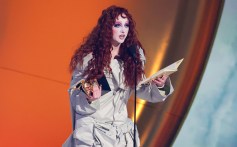
Outside of the U.S. health-care system, musicians struggling with health care costs can tap into multiple resources — but they rarely come close to providing all the costs needed for severe, long-term health issues. After Chappell Roan demanded “a livable wage and health care” for artists during her acceptance speech at the 2025 Grammy Awards, music-business experts pointed out that musicians signed to major labels could access health-insurance plans provided by the SAG-AFTRA union for premiums comparable to the ACA.
In addition, Sweet Relief provides grants for artists and others in the music industry through fundraising concerts, donations and other resources. The 31-year-old nonprofit is a “stopgap,” according to executive director Aric Steinberg. In 2023, Sweet Relief helped Malin set up an online fundraiser when the veteran punk frontman suffered a paralyzing stroke in his back. “It’s unfortunate we have to exist,” Steinberg says. “Sadly, we’re busier than ever.”
MusiCares, a 35-year-old affiliate of the Recording Academy, raises funds through high-profile events like its Grammy Week Person of the Year benefit, which has recently honored the Grateful Dead, Motown Records’ Berry Gordy Jr. and Smokey Robinson, Joni Mitchell and Aerosmith. It has provided nearly $120 million in health-care assistance to musicians and music-business workers over time, including roughly $10 million overall to 9,000 people during the past year. “It is not unlimited support,” says Theresa Wolters, MusiCares’ interim executive director/vp for health and human services. “However, it is very, very substantial.”
These limits were evident to William, who says he has reached out to MusiCares on Jon Dee’s behalf for health-care funding with “no result.” Russell Carter, Sweet’s longtime manager, adds that MusiCares contributed funds for some early medical costs, but the charity has been “just one piece in the puzzle of solving his financial woes.” (A MusiCares representative says the charity can’t comment on artists it works with. Wolters adds: “We work within the realities of our nonprofit model and our commitment to equitable support across the community. In these instances, MusiCares is one part of the solution.”)
Related
A2IM’s New Healthcare Plans for Artists Should Come With ‘Buyer Beware’ Warning…
10/20/2023
Sweet, 60, suffered a stroke last October while touring in Toronto. After leaving an intensive-care stroke unit in a Canadian hospital, he returned to his hometown of Omaha, Neb., and has received treatment in a rehabilitation program. Although he’s improving, particularly his speech, Sweet’s main issue remains “coordination,” Carter says, and he can’t walk or play guitar or keyboard. He also has vision problems and is “generally wheelchair-bound in his home.” In addition, Sweet’s wife recently broke her leg, forcing the family to hire a full-time nurse — which is not covered through the singer’s ACA insurance or early Medicare.
Since Sweet’s stroke, his GoFundMe has raised nearly $640,000, which, Carter says, “paid for what can only be described as exorbitant medical expenses.”
Sweet and his team view the crowdfunding not as an indictment of the U.S. health-care system but a mass validation of fan loyalty and colleagues’ affection. Sweet may not currently be able to tour, but his decades of touring are paying off. “Don’t dismiss the GoFundMe,” Carter says. “It’s a vehicle for fans to contribute. These are people that would spend $35 to see Matthew if he came through town in a second, and if they can spend $35 to help Matthew — clearly, they did it, instantly. They’re willing to give back. That’s a very positive thing.”
Coi Leray and Trippie Redd are officially parents. Coi revealed that she welcomed a baby girl named Miyoco on Tuesday (June 17) with a post featuring a glimpse of her new child on her Instagram Story.
The adorable photo finds her baby daughter’s hand wrapped around her mom’s finger while wearing a pink Polo Ralph Lauren onesie and showing off her full head of dark hair.
She also took to X to give her early thoughts on breastfeeding, which she said “ain’t no joke.” Coi attached a GIF of Leonardo DiCaprio saying, “It hurts.”
Coi Leray went public with the news she was expecting a bundle of joy in January. The 28-year-old then followed up in April, revealing she was gearing up to be a “girl mom.” Her baby girl received plenty of love at a May Hello Kitty-themed baby shower.
The “Players” rapper and Trippie Redd initially began dating in 2019 before breaking up a year later. The couple later rekindled their romance in 2024, but unfortunately, split once again this spring.
“I keep God first, always — I have so many things to be happy about. I’m about to be a new mom, about to have a little girl,” she told The Shade Room in May. “So she gives me a whole different type of new motivation.”
Leray continued: “I have to be strong. And I have to understand that there’s going to be a lot of things that happen in life, but at the end of the day, I have someone now that I have to raise that’s going to look up to me, and I want to be able to set an example that’s one.”
On the music front, Coi released her What Happened to Forever EP in February.
All Things Go festival is going international. Organizers for the festival announced Monday (June 16) that they will take the growing event to Toronto for two days this October.
The Canadian edition will take place the weekend after the festival’s already announced New York and D.C.-area events taking place Sept. 27-29 at Forest Hills Stadium and Merriweather Post Pavilion, respectively. All Things Go Toronto will be held at Budweiser Stage from Oct. 4-5 in partnership with Live Nation Women.
“Besties, we’re headed north. #AllThingsGo Toronto is officially ON,” the caption read on the festivals Instagram announcement. “Two STACKED days of iconic artist performances at Budweiser Stage by the waterfront.”
“Live Nation Women is proud to support the growth of the All Things Go festival brand,” said Live Nation Women president and chief strategy officer Ali Harnell in a release. “We remain committed to championing women and expanding opportunities for emerging talent across the live music landscape. This partnership goes beyond the festival—it’s about creating platforms where a wide range of artists and stories can be seen and heard.”
Organizers say the lineup for the Toronto festival will be revealed soon. Visit the festival’s website for more information, and check out the official announcment below:
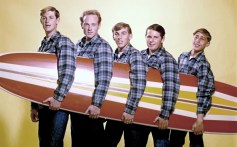
On June 11, leader of The Beach Boys legendary pop composer Brian Wilsondied at the age of 82. Below, Grammy-winning producer and performer Don Was remembers Wilson, who he cites as “the Claude Monet of rock and roll.”
Related
The Beach Boys’ 40 Biggest Billboard Hot 100 Hits
06/11/2025
I bought the 7” single of “I Get Around” in 1964 when I was just 12 years old. Back then, if you spent your whole allowance on one record, you played the A & B sides over and over and over. It wasn’t long before I came to prefer the romanticism of the flip side, “Don’t Worry Baby.” I tried really hard to figure out the chords on the guitar and it blew my mind when he modulated from E to F# in the middle of the bridge—not just because it was such a cool thing to do, but because it ripped your heart out.
It was my first glimpse into the notion that if you put some soul and imagination into your chord choices and voicings, you’d have a bunch of new colors to paint with. In that respect, Brian [Wilson] was the Claude Monet of rock and roll.
He was considered to be a genius, but I think it’s deeper and much more mystical than that. Brian was plugged into some source that enabled him to see and hear things that most of us don’t. The downside of that is the profound inner turbulence it can cause. The upside is that it enabled him to explore creative territory where no musicians had gone before — pushing and dramatically expanding the harmonic and textural boundaries of popular music.
A great example is his song “Till I Die.” I worked it out on the piano: it’s quite complex, not in any one key. There’s no real pattern to the changes. The movement of the chords vividly evokes the feeling of being forever adrift on an ocean of uncontrollable emotions. Yet, despite the intricacy, a 10-year-old can easily sing along with the melody that Brian put on top. It’s extremely difficult and rare to be able to walk that line between experimentalism and universal accessibility. Nobody’s done it with more seamless grace than Brian Wilson.
In 1996, I directed a documentary about him called I Just Wasn’t Made For These Times. The intended purpose of the film was to explain to non-musicians why he was considered to be a genius. It took a whole film to spell it out, but one thing became evident — everything Brian originally envisioned has now become ingrained in the fabric of contemporary music. I hope that future generations realize how radical it is that he came up with these things before anyone else and without a roadmap or digital electronics to lean on.
Despite his much-publicized inner-turmoil, Brian was a very strong, sweet, innocent guy with a heart full of love and music. He was on a mission to create songs that would bring comfort and understanding to the whole world. He succeeded beyond his wildest dreams.
Below is Was’s playlist with some of his favorite Wilson/Beach Boy tunes.
“The first thing we do when we book: we type in your name, and we write ‘homophobic,’” says nightlife promoter and producer Rayne Baron of finding acts for her annual festival, LadyLand. If nothing incriminating shows up, the artist has “passed the first test.” Next up: Has the musician in question wished fans “happy Pride”; have they collaborated with LGBTQ artists before; have they ever just flat-out said, “I love gay people”?
Related
Madonna Hits LadyLand 2024 to Celebrate NYC Pride
06/30/2024
Sitting in Greenpoint’s quaint McGolrick Park as a light rainstorm hovers above, Baron — better known to New York City music venues and party people as Ladyfag — is telling Billboard how she and her tiny team go about booking acts for her LGBTQ music festival, which debuted in 2018. Baron is laughing, but she’s entirely serious: LadyLand is a very queer and very Brooklyn affair that takes place during Pride Month — a time when the last thing any self-respecting LGBTQ person wants to do is watch a hater, or even a lukewarm ally, onstage.
Over the course of seven years (during which it took a pandemic breather), LadyLand has grown from a 5,000-strong party at Bushwick’s Brooklyn Mirage to one with 10,000 revelers at Greenpoint’s Under the K Bridge Park, the fest’s home since 2023; this year, LadyLand is expected to draw some 20,000 to the official-but-DIY-coded outdoor space on June 27-28, with Cardi B and FKA Twigs headlining.
“It’s not a party with problems,” she muses of the event, which takes her three-person team all year to plan. “It is a problem, and you keep solving them until you have a festival.”
2025 marks her second year working with Bowery Presents on LadyLand, which they co-produce. “It was a struggle from the start to find investors,” she admits. “People said the numbers don’t work, there’s a reason it doesn’t exist.”
But Baron — who by the time LadyLand launched in 2018 was an NYC nightlife legend thanks to seamlessly executed ongoing parties like Holy Mountain and Battle Hymn — was undeterred, intuitively sensing that queer New Yorkers, Brooklyn residents in particular, could use something that was “part party, part concert, part festival, part gay Pride.” LadyLand has been called “gay Coachella,” a label that Baron embraces while noting that it doesn’t quite give the full scope of the experience. (“But that’s fine, because people need something to reference,” she says.)
While Coachella brings to mind influencers snapping selfies in the desert, LadyLand is an inner-city gathering for LGBTQ people whose very identity reshapes culture — not merely reposting or recreating it after it’s made the rounds.
“In Brooklyn, we are still the heart of queer counterculture. We still write the prophecies for fashion, our DJs are playing the tracks with the ripple effect and the slang we use is a solid three years ahead of Hollywood,” says Charlene, a local performer and writer who’s become a mainstay of Brooklyn’s queer scene over the last decade (she recently took over summer Sunday BBQs at long-running gay bar Metropolitan from “Mother of Brooklyn Drag” Merrie Cherry.) “LadyLand is the only festival in New York that happily places our club fixtures and family alongside acts that are frankly too big for the club.”
“What makes LadyLand stand apart is how it celebrates the full spectrum of queer creativity — New York DJs, underground legends, dancers, fashion kids — it’s all there,” says dance music and ball culture legend Kevin Aviance, who made a surprise appearance in 2019 and returns this year. “Ladyfag curates with such intention, and it shows. Unlike circuit parties, this isn’t just about a beat — it’s about art, community and freedom.” As for what to expect from his DJ set, he adds, “Get ready, because I’m bringing the heat. Beats will be served, and the dolls will dance.”
That club-meets-festival vibe means that despite LadyLand’s big headcount, it doesn’t feel like a sprawling, isolating affair. “If it’s 10,000 people, 5,000 of them know the other 5,000; if they don’t know them, they might want to sleep with them. So you have to make it feel more familiar,” Baron says of pulling together the three-stage festival every year. “It’s a really strange concept to explain [to investors].”
Baron says Bowery Presents (which owns and operates many NYC venues) has been an open-minded co-producer. “It’s nice to feel supported,” she says. “They’re concert people, they know.” She also hails 12-year partner Red Bull: “They don’t do bullsh-t. They have never tried to do things that would affect the integrity of LadyLand.” This year, the energy drink brand helped her create a new stage that will bring Paul’s Dolls, a weekly party in Manhattan celebrating trans artistry, to the fest. “It’s a club, and you cannot have a gay club without dolls. We need them they need us. Gay culture is an ecosystem,” Baron explains. “In general, gays to the front. You don’t have to be gay to be here, but it helps.”
Ladyfag took her signature festival (including those giant inflatable green forearms with blazing red nails) from the Brooklyn Mirage to Under the K Bridge in 2023 for a simple reason. “Mirage kicked me out because I didn’t make enough money,” she frankly admits. When she started looking around her own neighborhood of Greenpoint, she was struck by the fact that the freshly built state park (where folks sometimes held illegal raves during the pandemic) reminded her of an electronic music festival in London which takes place in a park under a bridge. “I was always obsessed with Junction 2 Festival — my wife is English,” she says. After connecting with the parks department, she pulled everything together (“shoutout to my little team, Veronica and Carlos”) in just three months, putting on the first big event of any kind at the Under the K Bridge Park: “There was no template.” Since then, the state park has hosted numerous live music events, with the inaugural CBGB Festival set to take place there on Sept. 27.
LadyLand
Courtesy of LadyLand
To appeal to an extremely discerning nightlife crowd (“people can be c-nty,” she sighs) and live music lovers in a city that has no shortage of concerts, Baron goes through a high-wire balancing act every year while booking the lineup. Her team needs to nab headliners who sell tickets, but not book so many A-listers that it turns into a gathering of Stan armies. “I don’t want mega fandom,” she says. “We don’t want people standing in front of stage for 20 minutes waiting for the next performer, ruining the vibe.” She mixes in LGBTQ legends with up-and-coming artists, and spotlights local talent while also bringing in names who rarely make it to NYC. Plus, there are radius clauses with other NYC events and scheduling conflicts — oddly enough, Glastonbury has proved to be some of her biggest competition simply because it often goes down the same weekend and can pay more to performers than her scrappy little fest can.
“We are a small festival, as far as fests go,” she acknowledges. “Agents’ jobs are to make their artists money and there have been a lot of kindnesses shown my way.” Her long history in NYC nightlife has helped in that area, too — including for this year’s day-one headliner. Prior to Cardi B’s meteoric rise, when she was just another reality star (Love & Hip Hop) trying to break into music, Ladyfag booked her to play her monthly party Holy Mountain in February 2017. “She got very excited about being with the gays,” Baron recalls, her lips curving and eyes twinkling. “She was only supposed to do a few songs, but she wouldn’t stop. Within a few months, she became one of the biggest stars in the world — and she always remembered it.”
With that shared history, Baron was able to get the hip-hop superstar for less than what Cardi B would get from Madison Square Garden. “Was it free? F–k no,” she laughs. “Was it $4,000 that she put in her bra back in the day? No, we have all evolved from that.” This year’s day-two headliner, FKA Twigs, is someone Baron knows “outside of her agent,” too. LadyLand’s 2018 headliner Eve came from a similar situation (“We met at a party”) and she notes that while the inaugural edition “didn’t make any money, we didn’t lose money.” The following year, her nightlife background helped her nab Pabllo Vittar to pinch hit at LadyLand when headliner Gossip dropped out the last minute.
“We jumped in blind not really knowing what to expect, but I was completely blown away,” says the Brazilian drag juggernaut, who returns to play the fest this year. “It was amazing! The community, the energy, the artists, the vibe. I am so honored she asked me to play again this year officially, it feels very full circle with her.”
Despite that extensive Rolodex, LadyLand now books dozens of acts each year — meaning long gone are the days when everyone on the bill is a pal or acquaintance.
To fill out the lineup — and bring in artists outside the NYC nightlife realm — Baron and her team spend months sending each other clips of singers, DJs and rappers, debating their musical merits and keeping an eye on who’s buzzing on queer socials. Oftentimes, that means she can book rising artists before they become big names and demand higher price tags. One such case was 070 Shake, who blew up after signing on for the inaugural LadyLand but before the festival made its bow; this year, she sees 19-year-old rapper Cortisa Star in that vein.
But intuition without dollars only goes so far. With palpable remorse, she talks about the year where she almost booked a pre-fame Megan Thee Stallion but wasn’t able to afford the private plane that would have been required to take the rapper from point A to point B. Miley Cyrus has been a white whale for LadyLand; she says they’ve tried to get Ethel Cain every year; Grace Jones is on her wish list; and once she almost had Charli xcx locked, but her stage setup was too large for LadyLand’s then-home at Brooklyn Mirage. “Those are the things that happen that people don’t understand,” Baron says ruefully. But with each passing year, she checks another name off her wish list. For 2025, that “bucket list” booking was New York dance legend Danny Tenaglia, who plays Friday, the same day as Cobrah and Sukihana.
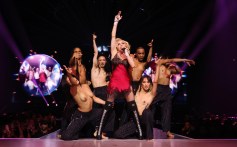
Plus, there are leftfield surprises that seem to fall into her lap thanks to LadyLand’s reputation as an experience that is queerer, edgier and more communal than most Pride Month events. “I appreciate those people who don’t need me and did it anyways. Madonna doesn’t need me, she had just done Brazil — the biggest concert she’d ever done — and then she came to my festival,” Baron shares of the 2024 edition, where the Queen of Pop popped by to help judge a ball. “She wanted to make a moment for gay people, and she did.”
LadyLand
Courtesy of LadyLand
Her careful, intuitive curation has brought everyone from SOPHIE to Honey Dijon to Pussy Riot to Christina Aguilera to the LadyLand lineup. “For a lot of people, it was the only time they ever got to see SOPHIE,” Baron says. One of those in attendance at the late electronic pioneer’s 2018 set was indie singer-songwriter Liam Benzvi, who is on this year’s bill. “The BQE is an institution of noise, and I’m proud to call it a friend and a bandmate,” says Benzvi of delivering his synth-pop gems at a state park that is literally under the Brooklyn-Queens Expressway. “Being from Brooklyn, I expect to see quality live music while surrounded by cool people, and cool is usually LGBTQ, so it’s a win-win for me.”
Bringing thousands of people to a state park entails “so much more work,” Baron chuckles as the raincloud above us finally burst open, forcing us to move the interview indoors to her apartment. “It’s a neighborhood. People live here — I live here — and you can’t have people partying after until 7 a.m. We need to make sure there’s enough bathrooms so that people aren’t pissing everywhere…. These are things that people don’t think about, nor should they have to.”
Plus, there’s “boring festival stuff with agents and managers, arguing about the run of the show, the size of the name on the poster.” To ensure each day’s lineup has an organic flow and isn’t solely based on least-to-most Instagram followers, there’s oftentimes an extended back-and-forth with artist reps, who care less about sonic juxtaposition and more about optics. “Sometimes agents do win and it’s a pisser,” she says. “I’m usually right on vibes.”
As anyone who has spent a moment at LadyLand (or any of her ongoing parties) can attest, Ladyfag does indeed know vibes — arguably, she’s become the premier connoisseur of queer nightlife vibes in NYC over the last decade. And in doing so, she’s not only spotlighting queer culture, but changing it.
“Ladyfag has created the pinnacle opportunity for us to show off the cultural engine we are,” Charlene says, “and in doing so has reshaped my relationship to the word ‘Pride.’”
“It feels like church for the children, honey,” says Aviance. “A safe, fierce space where you’re seen, heard and celebrated. I’ve been to a lot of parties in my time, but LadyLand is truly one of the best.”
Twenty-three years after the passing of country music great Waylon Jennings in February 2002, fans will get to hear the first of three albums’ worth of previously unreleased music from the late Country Music Hall of Famer.
Jennings’ son, three-time Grammy-winning artist/producer Shooter Jennings, will release the first in a trio of albums of previously unheard Waylon songs, Songbird, on Oct. 3 via Son of Jessi/Thirty Tigers. The album’s title track is a version of Fleetwood Mac’s 1977 track “Songbird,” written by the band’s Christine McVie.
The project began in the summer of 2024, when Shooter Jennings was sifting through numerous high-resolution multi-track transfers in his dad’s studio recordings. Shooter noted that he discovered “an audio record of an incredibly profound artist and his legendary band through their peak period of creative expansion.” The albums will feature music recorded by Waylon Jennings and The Waylors from 1973-1984.
“What became very apparent to me was that my dad was recording constantly with his band The Waylors between tours,” Shooter added. “Just having won the David-and-Goliath battle against RCA for creative control and artistic freedom, Waylon was awarded the ability to record his music on his terms in his own studios, with his touring band, and without label oversight and without any outside influence. There was just so much inside, my mind was blown! These weren’t demos, these were songs that were cut with the intention of releasing, and as time went on, not all of them found places on the albums that Waylon and the Waylors were releasing at the time.”
Shooter realized he had compiled enough music to fill three albums. While the majority of the recordings he found were already finalized, he did add a few additional touches to the recordings by bringing in several surviving members of Waylon’s band The Waylors: bassist Jerry Bridges, guitarist Gordon Payne, keys player Barny Robertson and background vocalist Carter Robertson. Meanwhile, contemporary country artists including Elizabeth Cook and Ashley Monroe came on board to add vocals to “Songbird.” Shooter mixed the original and newly recorded music on Sunset Sound Studio 3’s 1976 DeMedio API mixing board.
“Songbird is the beginning of Waylon’s return to the modern world,” Jennings said in a statement. “This is the first of three gifts from me to you: the fans that have kept my father’s voice, songs and legacy alive all these years. The next few years are going to be full of some of the most exciting musical moments that the world never knew they were going to hear. I hope that these records bring the kind of joy to you that they have brought me.
“This project has given me an entirely new chapter in my relationship with my father and working on this music has brought a whole new understanding about how, when and why my dad made music. The hard work is there on the tapes and the passion and the soul within is as alive today as it was the day it was recorded.”