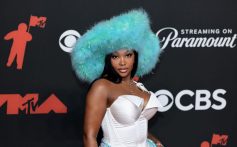
Summer Walker’s dispute with Universal Music Group burst into public view last week, when the music giant sued her in Los Angeles court. But it really started in August, when she first notified the label that she was terminating her 2017 record contract.
Or maybe it started way back in 1872, when California enacted strict time limits on labor contracts in the wake of the Civil War over concerns about involuntary servitude. Those rules evolved over the next 150 years (with a little help from a landmark ruling for Olivia DeHavilland) into the “seven-year rule,” which bars personal service contracts longer than — you guessed it.
Related
Summer Walker in Legal Dispute With Interscope Over Record Deal
Hilary Duff to Receive Outstanding Pop Tour of the Year Award at 2026 Billboard Live Music Summit
Judge Rules Woman Accused of Shooting at Rihanna & A$AP Rocky’s Home Mentally Fit to Stand Trial
It was that rule (formally California Labor Code Section 2855) that Walker invoked in August to break her deal with UMG’s Interscope. Fuerza Regida is also currently citing it in a legal battle with its label Rancho Humilde, and H.E.R.sued her longtime record label for release from her contract under the seven-year rule back in 2022.
In Walker’s case, she signed her recording contract with Interscope in 2017 and — we’ll wait while you do the math — more than seven years have since elapsed. So she’s free?
It’s not that straightforward. While any other contract would simply be terminated after seven years, record deals are treated uniquely under the law. Thanks to a 1987 exemption lobbied for by the music industry, labels can sue artists who break their deals on the seven-year rule, demanding lost profits from any contractually required albums they failed to deliver.
That’s what Interscope did last week. In its lawsuit against Walker, the label alleged she had only released three of her contract’s five-album commitment. And given that each of those prior albums reached No. 1 or No. 2 on the Billboard 200, Interscope says she owes a whopping $50 million in damages for failing to hand in the last two.
The threat of that kind of costly lawsuit makes the seven-year rule far more difficult for musical artists to invoke than essentially any other worker in California: “Recording artists are the only people that get stuck in these deals,” says Dina LaPolt, a prominent artist attorney who has been an outspoken critic of the industry carveout.
For record labels, that’s with good reason. Music deals have historically been built around a number of deliverable albums rather than a set length of time, and it’s hard to predict how long it will take for touring artists to produce new music. Labels say a hard time limit wouldn’t work for that structure and would force them to impose stricter delivery dates.
The industry also argues that record companies spend lots of money on the front-end to develop and promote unheralded artists — to say nothing of literal advances — and that they would not risk that kind of investment if big artists could simply refuse to hold up their end of the deal on the back-end.
“The truth is, after seven years, it’s mostly only going to be established artists who are still with the same record company,” says one highly placed record industry exec. “Those are the artists that benefit economically from being able to walk, taking away the very source of income that you depend on to invest in the new artists, where there’s much higher risk.”
Related
Fuerza Regida Legal Battle: Judge Won’t Decide Crucial Question in Record Label Lawsuit
Experts tell Billboard that seven-year rule fights aren’t uncommon, but that they’re mostly fought behind closed doors rather than in open court like Walker’s case. The rule is a legal “hammer” that artists can leverage to demand renegotiations, one artist attorney says, but that the unique music carveout gives labels enough counter-leverage that artists rarely want to test their luck getting sued for damages.
The last case that went deep into litigation came more than a decade ago, pitting Avenged Sevenfold, a chart-topping heavy metal band, against Warner Bros. Records. The label sued the band in 2016 after it bolted for Capitol Records by invoking the seven-year rule with one album left on its deal. That case almost went all the way trial before ending in a settlement that saw the band return to Warner for a final album in return for control over its earlier masters.
For Howard King, the veteran music litigator who represented Avenged Sevenfold in that case, battles over the seven-year rule come down to forcing the label to really prove their value to the artist and the actual amount of money they would have lost rather than some eye-watering estimate.
“If you’re the artist, you say ‘there’s no way the label can prove damages because it’s speculative and nobody can predict how a future record is going to perform’,” King says. “Of course, the label is going to say ‘you had four successful albums in a row and we have an expert who will testify that the fifth would have been equally successful.’”
Music-Related Legislation Before Congress Right Now: Full List of Bills (UPDATING)
Recent legislation, called the Free Artists From Industry Restrictions (FAIR) Act, would have still required artists who terminate deals to repay 120 percent of advances for undelivered albums. Labels argued at the time that the bill would have “radically destabilized recording agreements and California’s entire music economy.” The measure failed to pass the California Senate’s Judiciary Committee in June 2022.
Not all seven-year battles focus on the question of huge lost profits from undelivered albums. Fuerza Regida’s case, for instance, centers on whether the band voluntarily signed extensions that restarted the seven-year clock. Walker’s case, meanwhile, could turn on whether her earlier releases count as deliverables that satisfy her contract in the first place. She’s also suing her co-label for fraud, suggesting her dispute over the contract could have additional layers.
But the eye-catching $50 million figure at the bottom of Interscope’s complaint is a reminder of the unique limits that Walker and other musical artists face when invoking the protections of the seven-year rule — limits that artist advocates have long argued are unfair.
“These artists sign these things when they’re really young and have no money, and they often get a sh***y deal,” King says. “I think seven years of penance is enough.”
Stephanie Mills has some words for Lady Gaga, whom TheWiz star called a “culture vulture” while recalling a disappointing encounter on The Jason Lee Show recently.
Related
The 75 Best R&B Artists of All Time (Full List): Staff Picks
Lady Gaga Apologizes Over Haus Labs Bronzer Controversy
Lady Gaga Shouldn’t Get $230K ‘Consolation Prize’ After ‘Mayhem’ Lawsuit, Surf Brand Tells Judge
During the interview posted Wednesday (Oct. 14), Mills shared a story that she said took place “years ago,” describing how she was asked by Mother Monster’s team to perform “Home” — her signature track from the 1975 Wizard of Oz Broadway adaptation — for Gaga at a photo shoot in New York. “‘Home’ is Lady Gaga’s favorite song,’” Mills recalled the request saying. “Would you come surprise her and sing ‘Home’? At first, I said, ‘No, why would I do that? No.’ And I was talked into it.”
“She had her little black dog there and all the other people,” the R&B singer continued. “I sang for her — she didn’t smile, she didn’t do anything. She looked at me like I had two heads. I finished singing ‘Home,’ and we took pictures. Before we left, they said, ‘Listen, you’ve gotta delete all those pictures.’ They did not let us leave until they saw every picture being deleted. Very disrespectful.”
When host Jason Lee pointed out that Gaga has watched his show before, Mills delivered a message directly to the 16-time Grammy winner: “I hope you watch and I hope you remember what you did. And I feel like you owe me an apology.”
The Broadway icon also elaborated on her “culture vulture” assessment of Gaga. “That’s why I say she’s a culture vulture. She was managed by Black men. She did a song with R. Kelly,” Mills said, at which point Lee jumped in with, “Then she went over there with Tony Bennett and forgot all the Black people.”
“I had admiration for her,” Mills added. “I don’t any longer, but I give everybody respect.”
Billboard has reached out to Gaga’s reps for comment.
The subject of the A Star Is Born performer first came up as Mills was discussing the way Black women have historically been pitted against each other. In her case, people often tried to stir up conflict between her and Diana Ross, who played Dorothy Gale — whom Mills portrayed in the original Broadway cast — in the movie adaptation of The Wiz.
“To this very day, I love the ground Ms. Ross walks on,” Mills said, dispelling any notion that there was real-life beef between herself and Ross. “I think she’s the epitome of glamour. I never felt ill towards her when they did The Wiz movie. You’ve never heard her say a bad thing about me. You’ve never heard me say a bad word about her.”
“[Michael Jackson] loved both of us,” she added. “He really did. They like to pit Black people against each other. They don’t pit Lady Gaga against Barbra Streisand.”
Watch the full new episode of The Jason Lee Show below.
New wave icons Blondie stormed back on Thursday (Oct. 15) with the first single from their upcoming 12th studio album, High Noon. The jangly, driving “Spectral Eyes” was written by former Smiths guitarist Johnny Marr, who plays guitar and adds backing vocals on the track that also features former Sex Pistols bassist Glen Matlock.
The 13-track album, the group’s first since their 2017 LP Pollinator, is due out on Feb. 26 via BMG. According to a release, it mixes their classic punk/new wave energy with dance music and Latin rhythms on tracks that feature contributions from Marr, Matlock, Beirut’s Zach Condon and Jess Wolfe and Holly Laessig of Lucius. It is also the last recording co-founders singer Debbie Harry and guitarist Chris Stein made with late drummer and fellow co-founder Clem Burke before his death in 2025.
“This album is classic Blondie — an amalgamation of all our different influences and eras into something new,” said Harry in a statement. “This music feels grounded in the present, shaped by who we are and how we’re living now.”
Like Pollinator — which featured contributions from Joan Jett, Marr and The Strokes guitarist Nick Valensi — High Noon was produced by John Congleton, and the group said that following Burke’s death at 70 from cancer last April the record took on added meaning.
“It’s been a long, strange ride, and somehow here we are with another Blondie album,” said Stein of the latest from the band formed in New York in 1974, which now stands as one of the last remaining groups still making new music from an era that spawned the Talking Heads, The Ramones, Television and Patti Smith. “I’m not sure what the f–k I’m supposed to say at this point, except that we’re incredibly grateful for all your support over the years.”
Some of the LP’s songs also hint at the legacy of that era, including “Heartbreak Kid,” written by Stein and influenced by the late Heartbreakers singer/guitarist Johnny Thunders and Blondie’s New York roots, as well as the Matlock-penned, punk-rooted “Sleepwalking.” The collection from the “Heart of Glass” band will also feature a version of “Little Metal Drummer,” a track originally recorded by Blondie co-founding keyboardist Jimmy Destri for his 1981 solo debut album Heart On a Wall, with the original also featuring contributions from Harry and Burke.
The High Noon track listing: “Spectral Eyes,” “Heartbreak Kid,” “Come Back Home,” “Tambo Tambo,” “Man Who Had No Face,” “The End,” “Little Metal Drummer,” “Sleepwalking,” “Whistle Into the Wind,” “Antifreeze,” “East of Eden,” “Bad Underwear” and “Ah, Sunflower, Weary of Time.”
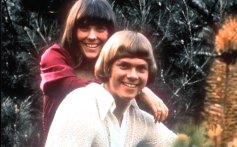
The Carpenters may have been the most polarizing pop music act of the 1970s. Karen and Richard had millions of fans worldwide, but also their share of detractors who took delight in mocking their squeaky-clean image. (One jibe, “Goody-four-shoes,” was so clever that Richard got a kick out of it.)
They also personified AM pop music at a time when rock, as well as FM radio, was coming to dominate the music business. They were seen by some as uncool and even corny. And, yes, they released a few singles, “Sing” chief among them, that almost defied their critics to go on the attack. But image considerations fade over time. You have to be of a certain age to even remember when the Carpenters stirred such passions — on both sides of these divides.
Karen and Richard could do no wrong on the pop charts in the first half of the 1970s. They had 16 consecutive top 20 hits on the Billboard Hot 100 at a time when you had to earn each hit one single at a time — unlike in the streaming era, when superstar acts frequently flood the top 20 with multiple hits upon the release of a new album. And they were big around the world: Their greatest hits album The Singles 1969-1973 topped the Official U.K. Albums Chart for 17 weeks, a record equaled by just two other groups or duos (The Beatles and Simon & Garfunkel) in the chart’s 70-year history.
Related
Remembering Carpenters, 50 Years After Their Hot 100 Debut
But cracks started to appear in the latter months of 1975. Richard, who produced the duo’s long string of hit, started to wear out. (Jack Daugherty was officially credited as producer in the early years, but Richard made the creative decisions.) Karen developed anorexia nervosa — a then-little-known eating disorder. Nowadays, someone with a similar problem could promptly seek help and feel the love and support of friends and fans. Then, it was held almost as a shameful secret. Karen died from complications from the disorder in 1983 at age 32.
The Carpenters’ reputation has grown immeasurably in the years since her death. Karen is now widely regarded as one of the best female singers of her time. And Richard is increasingly given credit for knowing how to frame that singular voice. Since Karen was so young when she died, it’s nice that Richard has had a good, long life. He turns 80 on Thursday (Oct. 15).
To mark the occasion, here are the Carpenters’ 27 Hot 100 hits, fearlessly ranked from worst to best by an OG Carpenters fan. We show “Superstar” and “Bless the Beasts and Children” as one double-sided single because that it how it’s listed for part of its run on the Hot 100.
We also included one non-Hot 100 hit, “Merry Christmas Darling.” Were we cheating just to get it on the list? Not really. The only reason it didn’t make the Hot 100 when it was released in 1970 is that holiday songs weren’t eligible for that chart back then. (Perhaps it will chart yet, given the annual takeover of holiday hits of all eras under the Hot 100’s current methodology.)
Here’s our ranking. There were only a couple of clunkers destined for the bottom spots, and many classics vying for the top spots.
Grein drew on his liner notes for the 1999 compilation The Singles 1969-1981, as well as fresh research and analysis, in writing this feature.
Malcolm Todd’s “Earrings” is No. 1 on the Top Gabb Music Songs chart for the second month in a row, crowning the September 2026 survey after first reigning over the August list.
Billboard has partnered with Gabb Wireless, a phone company for kids and teens, to present a monthly chart, which launched in October 2024, tracking on-demand streams via its Gabb Music platform. Gabb Music offers a vast catalog of songs, all of which are selected by the Gabb team to include only kid- and teen-appropriate content. Gabb Music streams are not currently factored into any other Billboard charts.
“Earrings” reached a new peak of No. 19 on the weekly Billboard Hot 100 in September and did not depart the top 20 for the entire month.
The track, which was originally released in 2024, has spent three months on Top Gabb Music Songs; it debuted at No. 9 on the July 2026 tally.
“Earrings” leads the chart over Stella Lefty’s “Boston,” which rises five positions to a new peak of No. 2. Like “Earrings,” “Boston” also debuted on the July 2026 survey, bowing at No. 21.
“Boston” spent the entirety of September at its peak so far of No. 2 on the Hot 100, while her album Long Way Home started at No. 11 on the Billboard 200 dated Sept. 5.
In all, the top 10 of Top Gabb Music Songs features seven songs performed by women for September, the most in any month since the ranking’s October 2024 inception. Two of those are by the same act: Olivia Rodrigo, whose “The Cure” and “Deja Vu” appear at Nos. 8 and 9, respectively.
Two of those songs are also newcomers to the region. Alyssa Grace’s “Bloodstream” zooms 16 positions to No. 4, while KATSEYE is the month’s top debut with “Hootie Frutti” at No. 6. The former returned to its peak of No. 45 on the Hot 100 in September, and the latter bowed at No. 31 on the tally at the end of August.
And following her Aug. 25 death, Dolly Parton’s “9 to 5” becomes the country singer’s first Top Gabb Music Songs appearance, debuting at No. 20.
See the 25-position chart below.
Top Gabb Music Songs
“Earrings,” Malcolm Todd (=)
“Boston,” Stella Lefty (+5)
“Choosin’ Texas,” Ella Langley (-1)
“Bloodstream,” Alyssa Grace (+16)
“Lush Life,” Zara Larsson (-2)
“Hootie Frutti,” KATSEYE (debut)
“Ordinary,” Alex Warren (-2)
“The Cure,” Olivia Rodrigo (-4)
“Deja Vu,” Olivia Rodrigo (=)
“Demons,” Josiah Queen (-4)
“God’s Plan,” Drake (+4)
“Beautiful Things,” Benson Boone (-1)
“Billie Jean,” Michael Jackson (-5)
“Bad Taste,” Freya Skye (debut)
“Hate That I Made You Love Me,” Ariana Grande (-3)
“Drivers License,” Olivia Rodrigo (-2)
“Beat It,” Michael Jackson (-4)
“Riptide,” Vance Joy (-1)
“Stressed Out,” Twenty One Pilots (-3)
“9 to 5,” Dolly Parton (debut)
“Heat Waves,” Glass Animals (reentry)
“What I want,” Morgan Wallen feat. Tate McRae (reentry)
“Gnarly,” KATSEYE (-2)
“Gabriela, “KATSEYE (-2)
“Been By Now,” Morgan Wallen (debut)
DROPS: “Mad,” Leonardo Nam & Rita Ora; “Dai Dai,” Shakira & Burna Boy; “Sundays,” Josiah Queen; “Chicago,” Michael Jackson; “Maggots for Brains,” Olivia Rodrigo; “Stargazing,” Myles Smith
A landmark two-year investigation into licensing practices in London has estimated that systemic racial bias costs the capital’s Black and South Asian live music scene up to £141 million ($185 million) a year.
The REMEL Report (Race Equality in Music Event Licensing)has analyzed years of data and gathered wide-ranging testimonies to better understand the inequalities between licenses handed out for live shows in the capital in recent years.
Related
Rap On Trial: The Long Battle to Keep Hip-Hop Lyrics Out of Court
Hilary Duff to Receive Outstanding Pop Tour of the Year Award at 2026 Billboard Live Music Summit
Judge Rules Woman Accused of Shooting at Rihanna & A$AP Rocky’s Home Mentally Fit to Stand Trial
The two-year process included contributions from Greater London Authority (GLA), the Metropolitan Police Service (MPS), U.K. Music, LIVE, the Musicians’ Union and a wide network of promoters, artists, venue operators and community representatives.
The report says that Black events are disproportionately canceled, restricted or blocked in comparison to white-led events and that certain genres such as afrobeats, hip-hop, R&B and dancehall are frequently flagged as “high risk” events. The report also says that Temporary Event Notices (TENs) are more likely to be refused in London’s most diverse boroughs, restricting opportunities for promoters.
The REMEL Report says that £1.1 billion ($1.45 billion) was estimated to have been spent in London on Black and South Asian live music in 2024, but that licensing bias was still preventing venues and promoters from hosting events. Over the past five years, a projected £650 million ($856 million) has been lost due to this bias.
The legacy of Form 696 is also highlighted, with “current risk assessments systematically singling out Black and South Asian live music events and imposing punitive surveillance and heavy conditions without credible evidence of increased safety risk,” the report reads.
Form 696 was a risk assessment used by London’s Metropolitan Police from 2008 to 2017 which required information from promoters on the type of music to be performed and the ethnic makeup of the likely attendees. Critics said that form enforced racial stereotyping of Black genres, and was eventually scrapped in 2017.
The report highlights case studies such as Blue Note London, which initially had its venue license objected to by the Met and cited a “crime and disorder” risk and warning that attendees leaving the venue could cause disturbances in the area. The Westminster City Council initially granted a license with reduced opening hours, but a petition signed by 3,000 members of the public played a role in Westminster City Council dropping their objections and granting the license as it was applied.
The REMEL report says that this case amounts to “‘financial racism’: the same crime-based objections used against Black and South Asian-led events, overturned in months by a brand with the capital and profile to fight back, a route rarely open to the independent promoters.” Read the full report here.
Speaking on the report, Charisse Beaumont, chief executive of Black Lives in Music, said, “The REMEL report is calling for a fair, transparent, evidence-based and culturally competent licensing system. A system that protects people without profiling them. A system that assesses risk through facts, not assumptions. A system that recognizes the value of Black and South Asian music, audiences, promoters and venues as an integral part of London’s cultural and economic life. Culture is not a risk. Culture is an economic asset.”
She added, “We are grateful for the collaboration of the Metropolitan Police, local authorities, music industry bodies and the GLA on project REMEL. This was a collective effort with the goal to provide evidence and solutions for change in the licensing process. It’s now time to move from recommendation to action.
“We need the REMEL recommendations and principles embedded into the very fabric of the licensing system to create a truly thriving nightlife. When licensing decisions are shaped by racial bias and overpolicing in music events, it suffocates creativity, stifles entrepreneurship and blocks economic opportunity.”