XIN Liu is getting ready to go on her XANADU 2.0 tour, and she shares how she has been preparing her choreography, blending ethnic elements into her tour along with performances at Coachella and HITC, producing her album, ‘O,’ her parents’ reaction to “Dad, What Are You Doing?” and more!
XIN LIU:
Hello Billboard! I’m XIN LIU. It’s been two years since ‘XANADU 1.0.’ During this time, for ethnic culture, I’ve gained clearer, deeper insights thanks to my IP, ‘XIN’S WORLD,’ where I explored hometown traditions in all fields – dance, music, embroidery. So this year will feature more ethnic elements. The stage design is far more dynamic now. We added catwalks to get closer to the audience. The visuals are also more direct and bold, reflecting the richness of my inner world. There’s definitely a suit-clad character dancing. I’d love to include an eight-pointed star. It symbolizes ethnic motifs. Also, a silhouette singing. The ‘XANADU’ album has an embroidery theme, so this needle will “thread” through the concert’s narrative. I come from a place with diverse ethnic cultures, it’s innate. I’ve always loved these elements, but now I fuse them with modern expressions, as the saying goes, “Ethnic is universal.” I hope audiences worldwide can see and hear China’s cultural essence, that’s what I hoped to achieve. I’m a meticulous planner, without it, I’d feel insecure. I’m probably planning next year’s work already. I only share things when fully prepared, releasing unfinished work feels irresponsible. I have intense OCD, especially about aesthetics perfection, everything I see must align with my vision. When something falls short of my standards it becomes an impassable roadblock, yet when certain details become truly unmanageable I learned to let go, to embrace others’ perspectives, only then can I move forward. I want to share this thought with everyone, you must let certain things go.
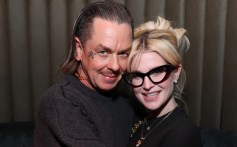
Everything about Kelly Osbourne’s engagement ring was meant to “bee.” In a sweet video, Sid Wilson took fans behind the scenes of how he procured a unique band for his fiancée — revealing that he took inspiration from none other than the late Joan Rivers when honing the design.
Related
Kelly Osbourne & Slipknot’s Sid Wilson Get Engaged at Ozzy’s Final Black…
07/06/2025
In the clip posted Monday (July 7) to Instagram, the Slipknot musician works closely with designer Pascal Mouawad on creating a custom diamond ring. “I want it to be a special thing, not just something that anyone could have,” Wilson says in the video.
“I have a nickname for Kelly, and it’s ‘honeybee,’” he continues during his consultation with Mouawad. “And coincidentally, a friend of hers, Joan Rivers, used to call her this. I didn’t know this. It’s like an amazing coincidence.”
Wilson adds, “It’s because she would buzz around and spread all of this good energy around like a bee.”
Rivers and Osbourne cohosted Fashion Police together for years. After the sharp-tongued comedian died at the age of 81 in 2014, Osbourne said on Talk Radio 1210, “That woman loved me and took a chance on me in a way that no one I’ve ever worked with has … She became the grandmother I’ve always wanted and never had and one of my best friends.”
With that special connection in mind, Mouawad came up with an 18K yellow-gold ring decorated with white and yellow diamonds that form a honeycomb pattern. When Wilson sees the ring for the first time in the video, he covers his mouth in awe.
“It’s, like, blinding,” he says of the massive middle diamond. “It sparkles — she’s going to love that. Oh my God, I’m getting married. This is crazy.”
After decades of friendship, Wilson and Osbourne starting dating around January 2022. The couple got engaged at Ozzy Osbourne’s final Black Sabbath concert on July 6.
In the midst of a successful international tour, life surprised Natalia Lafourcade and presented her with what might be her biggest challenge yet: becoming a mother.
The 41-year-old Mexican singer/songwriter shared the unexpected announcement of her first pregnancy on Monday (July 7) on social media, along with a series of photographs in which she looks loving and proud of her growing baby bump as she awaits the arrival of her first child.
Related
Natalia Lafourcade Explores Her Alter Ego in ‘Cancionera’: ‘This Album Reaffirmed My Role in Life…
04/23/2025
“Five months and still on tour, five months and still growing. There is a beautiful being inside my body, and I truly didn’t see this coming,” she wrote in the post. “What a gift from life, all while I sing and sing and keep singing for you, my beautiful people. See you very soon in Spain. In the meantime, we’ll keep growing.”
A wave of congratulatory messages from her colleagues and friends quickly followed the happy news.
“So excited! How beautiful,” wrote fellow singer/songwriter Julieta Venegas in the comments section.
“What a marvel,” echoed musician Juan Manuel Torreblanca.
Lafourcade is expecting her first child with her partner, Mexican-Venezuelan filmmaker Juan Pablo López-Fonseca, with whom she shares both a professional and personal relationship.
The four-time Grammy and 18-time Latin Grammy winner — who was included this year among Billboard’s 50 Best Female Latin Pop Artists of All Time — is embracing motherhood while touring cities across the Americas and Europe to perform her latest album, CANCIONERA. The LP follows De Todas Las Flores, her critically acclaimed 2022 album which earned her a Grammy and three Latin Grammys.
Lafourcade is set to perform a series of shows in Europe throughout July and August. She will return to Mexican stages in a couple of months to fulfill two scheduled dates at the Auditorio Nacional in Mexico City on Sept. 9 and 11.
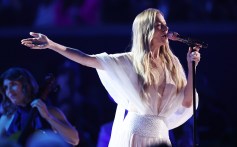
LeAnn Rimes dove deep into some nitty-gritty topics in her Flow Spacecover story published Monday (July 7), from the precarious beginnings of her relationship with husband Eddie Cibrian to the dental issues that led to her teeth falling out mid-concert in a viral moment last month.
Though the singer/songwriter and her partner have been married for 14 years at this point, their romance got off to a rocky start. Rimes has long been candid about having begun her relationship with Cibrian — whom she met on the set of the Lifetime movie Northern Lights — while both parties were still married to other people, and in the new piece, Rimes opens up about the backlash she faced in light of the affair more than a decade ago.
Related
LeAnn Rimes’ Teeth Fall Out Mid-Performance During Washington Concert
06/26/2025
“I realized very quickly that there are a lot of women who’ve been hurt,” she told the publication. “Like, I’ve been on both sides of that coin — I’ve been cheated on, too, so I know that feeling.
“But so many women don’t know what to do with that anger,” Rimes continued. “I was a target that was just easily projected upon. And once I realized that, things got a lot easier. Instead of taking it so personally, it’s like, look: This is not all my pain to carry. I know what I’m responsible for in the situation and making amends for that. But you know, the world’s pain is not mine to carry, and I think that really got thrown at me for a long time.”
Rimes was previously married for eight years to Dean Sheremet, while Cibrian shares two sons with ex-wife Brandi Glanville. Throughout their relationship, Rimes says that Cibrian has been her support system amid various health issues, including her long battle with psoriasis and her more recent struggles with perimenopause.
The musician has also dealt with various dental problems, as evidenced during a June concert that found Rimes rushing offstage after feeling her front dental bridge pop out of her mouth mid-song. “There wasn’t a f—ing thing I could do about it except either walk off or just hold my teeth in and sing, so I just ran with it,” she later said of the moment in an Instagram video. “The show can go on, even in the midst of sheer, utter embarrassment.”
To Flow Space, Rimes opened up about the many dental surgeries and oral pain she’s faced since getting a botched set of veneers when she was about 16. “I look at my pictures from that time, and my face was so different — it was just so swollen,” she told the publication. “Oh, it was awful. I was in chronic pain for, like, two-and-a-half years.”
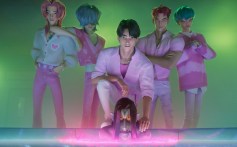
Netflix has confirmed that “Golden” is the song from the red-hot KPop Demon Hunterssoundtrack that it will enter for Academy Award consideration. The upbeat pop song was co-written by Kim Eun-jae (who is also known by her stage name EJAE) and Mark Sonnenblick.
Related
‘KPop Demon Hunters’ Becomes Highest-Charting Soundtrack of 2025
07/06/2025
If the song is nominated for best original song in January, EJAE will become just the second songwriter of Korean descent to receive an Oscar nomination. Karen O, whose mother is Korean, was nominated at the 2013 ceremony for co-writing “The Moon Song” with Spike Jonze for his film Her. Karen O also performed the song at the ceremony, in tandem with Ezra Koenig.
EJAE performs “Golden” in KPop Demon Hunters as part of the fictional K-pop girl group Huntr/x. The group consists of Rumi, Mira and Zoey, whose singing voices are performed by EJAE, Audrey Nuna and Rei Ami, respectively. The film was released on Netflix on June 20.
“Golden” will vault from No. 81 to No. 23 on the Billboard Hot 100 that will be posted tomorrow, which makes it the highest ranking of seven songs from the soundtrack. The song is also a global smash. It leaps from No. 52 to No. 2 on the Billboard Global 200 this week, and from No. 51 to No. 5 on the Billboard Global Excl. U.S. chart.
“Golden” is vying to become the first song from an animated film to receive an Oscar nomination since “Dos Oruguitas” from Encanto, written by Lin-Manuel Miranda, which was nominated four years ago.
Related
Inside the Music of Disney’s ‘Encanto’ With Lin-Manuel Miranda: ‘Anytime We Lean Into Authenticity…
11/22/2021
EJAE is a South Korean and American singer-songwriter and record producer known for her work with Red Velvet, aespa, LE SSERAFIM, NMIXX, TWICE, Kard and other South Korean artists.
Sonnenblick’s previous credits include co-writing the lyrics for the musical adaptation of The Devil Wears Prada.
The Oscar submission deadline in the best original song category is Wednesday, Oct. 15. Oscar shortlists in 10 categories, including best original song, will be announced on Tuesday, Dec. 16. Nominations will be announced on Thursday, Jan. 22. The 2026 Oscars will be presented on Sunday, March 2.
Related
Here Are the Key Dates for 2026 Oscars, Including an Earlier Submission Deadline in the Best…
04/21/2025
The six other songs from KPop Demon Hunters on this week’s Hot 100 are “Your Idol” (which vaults from No. 77 to No. 31) and five debuts: “How It’s Done” (No. 42), “Soda Pop” (No. 49), “What It Sounds Like” (No. 55), “Free” (No. 58) and “Takedown” (No. 64).
“I want to hear an American poem,” rings out the voice of Ras Baraka to introduce the second act of Beyoncé’s stadium-conquering Cowboy Carter Tour. “Something American, you know. Some sassy s–t, or South Carolina slave shouter, Alabama backwoods church shack call and response… Are there any American poets in here?”
Related
Beyoncé’s ‘Cowboy Carter’ AOTY Grammy Victory Feels Like a Lifetime Achievement Award – But Don’t…
02/03/2025
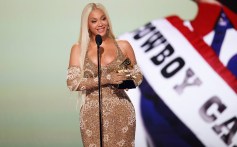
Baraka — the current mayor of Newark, N.J., spoken word poet and son of Black Arts Movement luminaries Amiri and Amina Baraka — asks a question that Beyoncé sketches out an answer to through her career-spanning, three-hour Cowboy Carter spectacle. When the 35-time Grammy-winner appeared at the top of the show on July 4, with her cowboy hat tipped down and an American flag fur coat draped over her shoulders, for a few seconds, the bitter realities of life outside of Northwest Stadium seemed to dissipate.
Taking place just a 25-minute drive from the White House and on the same day President Trump signed his destructive new bill into law, the Cowboy Carter Tour arrived in Landover, Md. in a season ripe for discourse — though that’s been the name of the game for the singer’s current era since she kicked things off with the Billboard Hot 100-topping “Texas Hold ‘Em” during the 2024 Super Bowl. Given its parent album’s themes of illuminating the oft-obfuscated Black roots of country music and her implementation of Americana symbols and aesthetics, many people expected Beyoncé to make some sort of statement during her July 4 show.
But beyond a quick “Happy Fourth” near the top of the first act, Beyoncé didn’t say much about the holiday (or its pressing present context) during the show. In a way, that made the tour’s overall message even more poignant — while also exposing some of its shortcomings.
After opening with the rousing “Ameriican Requiem,” a dirge of sorts for “a pretty house that we never settled in,” Beyoncé segued into “Blackbiird,” her faithful cover of the Beatles classic. On the record, Beyoncé’s version of “Blackbird” invites several ascendant Black women in contemporary country music (Brittney Spencer, Tanner Adell, Reyna Roberts and Tiera Kennedy), while her solo live rendition comes after a verbal and visual acknowledgement of the boundary-pushing Black women in entertainment who paved the way for her. After taking the Founding Fathers to task with the first song and honoring her trailblazing foremothers in the second, Beyoncé then delved into a medley of the National Anthem and “Freedom” — perhaps her most direct commentary of the night.
Taking notes from Jimi Hendrix’s iconic Woodstock ‘69 version of “The Star Spangled Banner” — a brooding take on the anthem streaked with startling octave jumps and distorted regressions — Beyoncé’s equally unnerving rendition of the anthem perfectly captured the ominous energy of the current administration. It’s not a moment of pride or patriotism at all; just as Hendrix called on the anguish of the Vietnam War and Dr. Martin Luther King Jr.’s assassination the previous year, Beyoncé funneled the stomach-churning anxiety of the current administration’s Project 2025 rollout into her rendition.
After reaching exactly midway through the anthem’s first verse, Beyoncé sings, “You were only waiting for this moment to be free” from “Blackbiird,” signaling the transition to “Freedom,” a Grammy-nominated track from her 2016 Lemonade album that served as the official song for Kamala Harris’ 2024 presidential campaign. With its cries of “Freedom, freedom, where are you/ ‘Cause I need freedom too,” the anthemic track — born out of early Black Lives Matter-era fury — smartly complemented her Hendrixifed “Star Spangled Banner” rendition. Yes, she’s draped in red, white and blue, but her vision of America is built on the innate understanding of its countless evils and atrocities.
She continues to hammer this point with her subsequent medley of “Ya Ya” and “Why Don’t You Love Me?” As she takes stock of America’s fault in the former — albeit in a way that’s not nearly as ballsy as Baraka’s “American Poem” — she uses the latter to process the emotions of a people constantly denied access to a dream that would be incomprehensible without their contributions, both by force and by choice.
In his close reading of Hendrix’s anthem rendition, writer, musician and academic Paul Grimstad writes: “We find that an electric guitar can be made to convey the feeling that the country’s history could be melted down, remolded, and given a new shape.” And that’s the exact feeling Beyoncé attempts to tap into throughout the Cowboy Carter Tour. It’s why she kicks off the next act with “America Has a Problem.” When she released the Miami bass-laced track alongside the rest of Renaissance in 2022, Beyoncé made it clear that she is America’s problem. As she recontextualizes the song to introduce the show’s Southern hip-hop-rooted section (“My House,” “Diva” and “Formation” all make appearances), America’s problem is no longer just her — it’s all Black people staking their claim to “country,” the fearless innovation of the Black queer community that grounded Renaissance and the resounding confidence of young Black girls like Blue Ivy, who kills her dance solo during the song each night.
It’s also why “Daughter,” an opera-inflected Cowboy Carter track in which Beyoncé plays America’s scorned daughter, introduces the Renaissance act, a segment lifted from 2023’s Renaissance World Tour that uses house music and ballroom to imagine a version of America that embraces and uplifts all of its citizens. It’s also why she closes the show with an enormous bust of a masked Statue of Liberty, during “Amen.” Clearly, the American project is still in progress — and for Beyoncé, the promise of what the country could be is enough to keep fighting for it.
Beyoncé has been one of the defining artists of our time from a sociopolitical standpoint since at least 2013’s eponymous surprise album. But the Cowboy Carter Tour begs the question of whether her art is actually meeting the present moment. With Trump’s newly signed bill effectively deading upward class mobility for future generations and the ongoing conflict in Gaza, a lot of Americans understandably don’t just feel betrayed by the American flag, they’re outright rejecting it. For them, the cost of America isn’t outweighed by its promise, so why continue to stake a claim in its current iteration when it can be discarded in favor of something completely new? From the instability of the housing and job markets to the upheaval of federal institutions as they relate to healthcare and the arts, the current moment seems to call for something a bit stronger than allusions and metaphors.
Take Bob Vylan, for example, the English punk-rap duo that was recently dropped by their talent agency, UTA, after calling for a free Palestine and “death to the IDF” at the 2025 Glastonbury Festival. There’s also the way Kendrick Lamar explicitly called out the U.S. using its imagery during his Super Bowl halftime show performance earlier this year — but even that, arguably, pales in comparison to the fearlessness of protester Zul-Qarnain Kwame Nantambu, who crashed the show in support of Gaza and Sudan and was later arrested. More recently, Bad Bunny called U.S. dates for his upcoming Debí Tirar Más Fotos World Tour “unnecessary,” presumably due to the current administration’s targeting of immigrants and Latino people. The same day Beyoncé played Landover, Bad Bunny dropped his “Nuevayol” music video, in which he references the 1977 takeover of the Statue of Liberty by Puerto Rican nationalists and trolls Trump by having an imitator apologize to immigrants in America. These are the kinds of in-your-face, explicit actions that the current climate calls for. They’re naturally divisive and inherently messy moments (particularly Bob Vylan’s), sure, but they make the point unignorable and unmistakable.
These artists are putting something on the line: touring dollars, industry representation, and even their visas. Yes, much can and should be said about America’s declining literacy rates and the misogynoir people carry when interacting with Beyoncé’s work, but it’s also worth interrogating the effectiveness of art (and its presentation) that ultimately leaves quite so much to interpretation. Queen Bey’s desire to let her art speak for itself is paramount to her brand, but without her speaking on her own intentions as they relate to Cowboy Carter’s political elements, the project can only stand for so much. For what it’s worth, she has spoken plainly and explicitly through the Democratic electoral framework — the effectiveness of which varies wildly depending on who you ask — for the past decade and change, stumping for Obama, Clinton and Harris during their respective races. (She also shared an Instagram post in support of Biden in 2020.)
Perhaps one of Beyoncé’s goals with the Cowboy Carter Tour is to say that the American flag and standard Americana imagery belong to all its people, not just white nationalists or those who favor a WASP-steeped version of the country. Through her costuming alone, she’s challenging whitewashed ideas of who is “allowed” to be seen and understood as American. Maybe another one of those goals is to intentionally lean into those aesthetics to offer a critique of the country, no matter how milquetoast.
Those are admirable intentions, but they’re borderline impossible to do effectively in a country that often mistakes protest for patriotism. Look at Bruce Springsteen’s “Born in the U.S.A.” becoming an Independence Day anthem despite being about a disillusioned Vietnam veteran’s return home. Or Ethel Cain’s “American Teenager,” an anti-war song that critiques American gun culture and deconstructs the concept of the American Dream, which Barack Obama named one of his favorite songs of 2022. At minimum, hopefully, Cowboy Carter and its tour mark the beginning of some people’s questioning and critique of the American project — even if it may not feel potent enough for those who are already much further down that path.
Throughout the Cowboy Carter Tour, Beyoncé also includes bits of Gil Scott-Heron’s “The Revolution Will Not Be Televised” to call for a sort of metaphorical, cultural and spiritual revolution that makes an expansive version of America the default. Here, she’s trading on the same revolution-minded aesthetics she employed during the Lemonade album era — remember her recreating Huey P. Newton’s iconic peacock chair pose on the Formation World Tour? Or the Malcolm X and Black Panther Party tributes during her “Formation” cameo at the 2016 Super Bowl halftime show?
If Beyoncé was fully invested in the principles and framework behind those symbols and aesthetics, then she would likely agree that the primary way her cultural revolution will result in a significant improvement of the lived realties and material conditions of oppressed people is through a mass redistribution of wealth and the dismantling of capitalism — two things that are at direct odds to the ethos and essence of what we understand to be the Beyoncé brand. All this is to say, for all its technical achievements and innovations, the Cowboy Carter Tour is a stark reminder that an institution like America will only embrace revolutionary aesthetics in art so long as it can keep selling the dream and concept of revolution, whilst ensuring a material and physical revolution remains virtually impossible.
Taken as a moment of personal and artistic catharsis, Cowboy Carter and its accompanying tour are two of the strongest musical offerings of the 21st century. Taken as a political statement, things get a bit shaky. But that’s precisely why Beyoncé remains this century’s greatest pop star; no other artist is inspiring this level of debate and conversation on so many different planes at the same time. And they’re certainly not packing stadiums and breaking records outside of their core genre while doing so. As the tour interludes remind us, Cowboy Carter is just the second installment of Beyoncé’s yet-to-be-concluded album trilogy. Of course, nothing is confirmed, but it’s likely those interludes also include bits of a film that will presumably thread together all three albums.
And that’s probably the most important thing to keep in mind as the Cowboy Carter Tour approaches its close in Las Vegas on July 26. As much as parts of Renaissance gained new meaning upon Cowboy Carter’s release (the “un-American life” she sings of in “I’m That Girl,” for example), Queen Bey’s vision is still incomplete until Act III arrives. Until then, we’ll continue to sit with Cowboy Carter and all its complexities, an apt soundtrack for a country slowly crumbling under the weight of its own contradictions.