With hit releases on imprints including Dim Mak, Experts Only, Diynamic, Black Book Records and Insomniac Records, producer and DJ Max Styler is now going solo with the launch of his own label, Nu Moda.
The California-born artist has been producing for over a decade, topping the Beatport charts multiple times with his largely tech house productions. But, according to Styler’s team, the new label is about more than just music production — it’s a “creative platform designed to challenge convention and open new intersections between sound, style and identity.”
Related
Label Look: How John Summit Built Experts Only Into an Indie That Thinks Like a Major
Sia’s Estranged Husband Wants $260,000 Per Month to Maintain ‘Upper-Class Lifestyle’
Sylvan Esso Is Pulling Its Catalog From Spotify
In practice, this means cultivating a strong signature aesthetic inspired by underground subcultures, with original handcrafted artwork incorporating typography, layered iconography and symbolic imagery.
“Nu Moda is for me, my friends and the artists who inspire me,” Styler says. “It’s a place to push boundaries, whether that’s in production, style, or self-expression.”
The label’s debut release will be Styler’s own “You & Me,” out Friday (Oct. 17). The artist says the track “fuses a lot of the sonic elements I’ve become known for as a producer while touching on some new textures, which is something I try to do with every new track.”
Nu Moda is celebrating its start with a Dec. 3 launch party at Floyd in Miami during Art Basel and will also host an event during Miami Music Week 2026. These events will offer “a first look into the experiential side of the label…[bringing] together music, fashion and art under one roof,” says the Nu Moda team.
Beyond the debut release, No Moda will welcome a roster of like-minded collaborators and new talent in 2026. In the meantime, Styler is on a tear of a tour with headlining club shows across the U.S. and Canada and upcoming festival sets at EDC Orlando 2025, Groove Cruise 2026 and Coachella 2026.
“For as long as I can remember, starting my own label has been one of my biggest goals,” adds Styler. “This is something that I’ve been working toward for many years, and now that the moment has arrived, I couldn’t be more excited.”
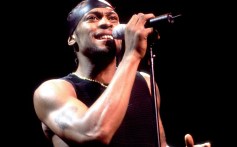
Beyoncé paid homage to D’Angelo on Tuesday (Oct. 14) following his death from pancreatic cancer.
“Rest in peace, Michael Eugene Archer, known to the world of music as the inimitable D’Angelo,” she wrote on her website while sharing a black-and-white photo of him. “We thank you for your beautiful music, your voice, your proficiency on the piano, your artistry. You were the pioneer of neo-soul and that changed and transformed rhythm & blues forever. We will never forget you.”
Related
R&B Legend D’Angelo Dead Following a ‘Prolonged’ & ‘Courageous Battle With Cancer’
Tyler, the Creator Tributes to D’Angelo as the Artist Who ‘Shaped’ His ‘Musical DNA’
D’Angelo’s Biggest Billboard Chart Hits: ‘Lady,’ ‘Untitled’ & More
D’Angelo’s family confirmed in a statement to Billboardthat he died at 51 years old on Tuesday.
“The shining star of our family has dimmed his light for us in this life. After a prolonged and courageous battle with cancer, we are heartbroken to announce that Michael D’Angelo Archer, known to his fans around the world as D’Angelo, has been called home, departing this life today, Oct. 14, 2025,” the statement reads. “We are saddened that he can only leave dear memories with his family, but we are eternally grateful for the legacy of extraordinarily moving music he leaves behind. We ask that you respect our privacy during this difficult time but invite you all join us in mourning his passing while also celebrating the gift of song that he has left for the world.”
Tyler, the Creator also posted a lengthy tribute to the late R&B legend on Instagram, telling the story about how he used the $20 he got on his 9th birthday to buy D’Angelo’s 2000 sophomore album Voodoo. “Citas world had ‘left&right’ on loop; brown sugar became a staple at home and nothing even matters by ms.hill was on repeat, so i had no doubt that voodoo would deliver. i had no idea that would help shape my musical dna,” he wrote. “The amount of raps ive wrote to BOOTY on the front porch that year, the amount of times ive tried to mimic vocal phrasing from SEND IT ON, the scratches the disc ended up with from repeating THE ROOT……too many.”
The rapper also wrote about how “One Mo’Gin” from Voodoo inspired “Ring Ring Ring” from Tyler’s latest Billboard 200-topping album Don’t Tap the Glass, including the pre-chorus: “I know you said not to call you again, but I miss you/ And I hope I can see you one more gin ’cause I miss you.”
Busta Rhymes has launched defamation counterclaims against a former assistant who accused the veteran rapper of punching him in the face for using his phone on the job.
Rhymes (Trevor Smith Jr.) was hit with a lawsuit this summer from Dashiel Gables, who worked as the rapper’s personal assistant for roughly six months starting in July 2024. Gables alleges Rhymes routinely abused employees and that the rapper physically assaulted him in the lobby of a Brooklyn luxury high-rise last January.
Related
Rod Wave Countersues After $27M Tour Lawsuit: Promoter Is Trying to Force ‘Indentured Servitude’
Sia’s Estranged Husband Wants $260,000 Per Month to Maintain ‘Upper-Class Lifestyle’
Sylvan Esso Is Pulling Its Catalog From Spotify
At the time the lawsuit was filed, Rhymes called it “an attempted shakedown by a disgruntled former assistant” and vowed to countersue. He has now followed through with a defamation counterclaim docketed on Monday (Oct. 13) in federal court.
“Smith did not assault or batter Gables,” writes Rhymes’ attorney Patrick Butler. “Gables knew the statements were false, or acted with reckless disregard for the truth, including by fabricating allegations of criminal conduct and violence, omitting exculpatory facts and deliberately ignoring contrary evidence.”
The countersuit alleges that Gables’ very public lawsuit has damaged Rhymes’ reputation and caused him humiliation and embarrassment. The rapper also says he lost two advertising campaigns as a result of Gables’ defamatory claims.
Generally speaking, statements made in court are shielded from any liability for defamation under a principle known as the litigation privilege. Rhymes’ countersuit attempts to get around this limitation by alleging that Gables shared his lawsuit with the press and encouraged media reports about it.
Gables’ lawyers did not immediately return a request for comment on Monday.
The lawsuit, filed in August, claimed that Rhymes “routinely degraded” Gables and other employees by screaming, threatening, smacking and spitting at them. The rapper demanded that Gables work more than 15 hours a day but refused to pay him overtime, according to the former assistant.
Gables said this poor treatment escalated in the early hours of Jan. 10, when he was unloading Rhymes’ luggage in the lobby of the rapper’s Brooklyn apartment building. Gables allegedly received a call from his daughter and tried to respond via text, sending Rhymes “into a rage.”
“He screamed ‘Stay the f–k off your phone,” wrote Gables’ lawyers in the complaint. “When plaintiff explained it was his daughter, Busta Rhymes responded, ‘Don’t tell me about your f–king kid, what the f–k that gotta do with me? When Plaintiff responded that it could have been an emergency, Busta Rhymes asked ‘are you talking while I’m talking?’ and then, with a closed fist, punched plaintiff in the face.”
The former assistant alleged he had to go to the hospital to get treatment for his injuries, and that he was later “blacklisted” from the hip-hop industry. Gables also filed a police report against Rhymes, but no charges were ever brought.
Rhymes denies all of Gables’ allegations in his Monday answer and counterclaim. He also asserts a slew of defenses to the lawsuit, including that “any conduct to which plaintiff was allegedly subjected constituted no more than petty slights and trivial inconveniences.”
Universal Music Group (UMG) chairman/CEO Lucian Grainge has updated UMG employees on the “progress” the music giant is making on generative artificial intelligence in a new staff-wide memo circulated Monday (Oct. 13), which outlines the company’s efforts to safeguard artists’ copyrighted material while touting the technology’s potential to unlock new revenue.
“UMG is playing a pioneering role in fostering AI’s enormous potential,” Grainge wrote in the memo. “While our progress is significant, the speed at which this technology is developing makes it important that you are all continually updated on our efforts and well-versed on the strategy and approach.”
Related
UMG Chief Digital Officer on AI Music: ‘If You Don’t Claim a Seat at the Dinner Table, You Might Wind Up on the Menu’
Sia’s Estranged Husband Wants $260,000 Per Month to Maintain ‘Upper-Class Lifestyle’
Sylvan Esso Is Pulling Its Catalog From Spotify
Grainge went on to highlight UMG’s work with AI developers, noting the company’s AI deals with top platforms like YouTube, TikTok and Meta as well as emerging ones like BandLab and Soundlabs. Universal Music Japan, he added, recently announced a deal with Japanese telecommunications company KDDI to develop new music experiences for fans and artists using the technology.
The CEO also discussed AI’s potential “to connect our artists with their fans in new ways,” including through the use of agentic AI — essentially AI agents that are capable of more sophisticated problem-solving. In Grainge’s words, agentic AI has “the potential to revolutionize how fans interact with and discover music” and help provide “a significant source of new future revenue for artists and songwriters.”
Grainge additionally reiterated UMG’s commitment to responsibly trained AI, mentioning the company’s deals with AI developers like ProRata and KLAY and noting that it’s “in discussions with numerous additional like-minded companies whose products provide accurate attribution and tools which empower and compensate artists — products that both protect music and enhance its monetization.”
“And to be clear — and this is very important — we will NOT license any model that uses an artist’s voice or generates new songs which incorporate an artist’s existing songs without their consent,” Grainge continued. He added that many AI companies’ efforts to make it legal to train AI technology on copyrighted material with the consent of rights holders “amount to nothing more than the unauthorized (and, we believe, illegal) exploitation of the rights and property of creative artists.”
Related
UMG Partners With Liquidax to Speed Up AI Patents Program: ‘Accelerating the Evolution of the Music Ecosystem’
Grainge also addressed the topic of so-called “AI slop” on streaming services, pointing out UMG’s unveiling of “artist-centric” principles at the top of 2023 — notably before the AI revolution really began taking hold in the music business later that year — that he says were designed to “combat what is essentially platform pollution.”
“Since then, many of our platform partners have made significant progress in putting in place measures to address the diversion of royalties, infringement and fraud — all to the benefit of the entire music ecosystem,” he wrote, later noting UMG’s recently announced collaboration with SoundPatrol, which utilizes neural fingerprinting that it says can detect the use of copyrighted material in AI-generated songs (Sony also partnered with the company).
Read Grainge’s full memo below.
Dear Colleagues,
I am writing today to update you on the progress that we are making on our efforts to take advantage of the developing commercial opportunities presented by Gen AI technology for the benefit of all our artists and songwriters.
I want to address three specific topics:
Responsible Gen AI company and product agreements;
How our artists can participate; and
What we are doing to encourage responsible AI public policies.
UMG is playing a pioneering role in fostering AI’s enormous potential. While our progress is significant, the speed at which this technology is developing makes it important that you are all continually updated on our efforts and well-versed on the strategy and approach.
The foundation of what we’re doing is the belief that together, we can foster a healthy commercial AI ecosystem in which artists, songwriters, music companies and technology companies can all flourish together.
NEW AGREEMENTS
To explore the varied opportunities and determine the best approaches, we have been working with AI developers to put their ideas to the test. In fact, we were the first company to enter into AI-related agreements with companies ranging from major platforms such as YouTube, TikTok and Meta to emerging entrepreneurs such as BandLab, Soundlabs, and more. Both creatively and commercially our portfolio of AI partnerships continues to expand.
Very recently, Universal Music Japan announced an agreement with KDDI, a leading Japanese telecommunications company, to develop new music experiences for fans and artists using Gen AI. And we are very actively engaged with nearly a dozen different companies on significant new products and service plans that hold promise for a dramatic expansion of the AI music landscape. Further, we’re seeing other related advancements. While just scratching the surface of AI’s enormous potential, Spotify’s recent integration with ChatGPT offers a pathway to move fluidly from query and discovery to enjoyment of music—and all within a monetized ecosystem.
HOW OUR ARTISTS CAN PARTICIPATE
Based on what we’ve done with our AI partners to date, and the new discussions that are underway, we can unequivocally say that AI has the potential to deliver creative tools that will enable us to connect our artists with their fans in new ways—and with advanced capability on a scale we’ve never encountered.
Further, I believe that Agentic AI, which dynamically employs complex reasoning and adaptation, has the potential to revolutionize how fans interact with and discover music.
I know that we will successfully navigate as well as seize these opportunities and that these new products could constitute a significant source of new future revenue for artists and songwriters.
We will be actively engaged in discussing all of these developments with the entire creative community.
While some of the biggest opportunities will require further exploration, we are excited by the compelling AI models we’re seeing emerge.
We will only consider advancing AI products based on models that are trained responsibly. That is why we have entered into agreements with AI developers such as ProRata and KLAY, among others, and are in discussions with numerous additional like-minded companies whose products provide accurate attribution and tools which empower and compensate artists—products that both protect music and enhance its monetization.
And to be clear—and this is very important—we will NOT license any model that uses an artist’s voice or generates new songs which incorporate an artist’s existing songs without their consent.
New AI products will be joined by many other similar ones that will soon be coming to market, and we have established teams throughout UMG that will be working with artists and their representatives to bring these opportunities directly to them.
RESPONSIBLE PUBLIC POLICIES COVERING AI
We remain acutely aware of the fact that large and powerful AI companies are pressuring governments around the world to legitimize the training of AI technology on copyrighted material without owner consent or compensation, among other proposals.
To be clear: all these misguided proposals amount to nothing more than the unauthorized (and, we believe, illegal) exploitation of the rights and property of creative artists.
In addition, we are acting in the marketplace to see our partners embrace responsible and ethical AI policies and we’re proud of the progress being made there. For example, having accurately predicted the rapid rise of AI “slop” on streaming platforms, in 2023 we introduced Artist-Centric principles to combat what is essentially platform pollution. Since then, many of our platform partners have made significant progress in putting in place measures to address the diversion of royalties, infringement and fraud—all to the benefit of the entire music ecosystem.
We commend our partners for taking action to address this urgent issue, consistent with our Artist-Centric approach. Further, we recently announced an agreement with SoundPatrol, a new company led by Stanford scientists that employs patented technology to protect artists’ work from unauthorized use in AI music generators.
We are confident that by displaying our willingness as a community to embrace those commercial AI models which value and enhance human artistry, we are demonstrating that market-based solutions promoting innovation are the answer.
LEADING THE WAY FORWARD
So, as we work to assure safeguards for artists, we will help lead the way forward, which is why we are exploring and finding innovative ways to use this revolutionary technology to create new commercial opportunities for artists and songwriters while simultaneously aiding and protecting human creativity.
I’m very excited about the products we’re seeing and what the future holds. I will update you all further on our progress.
Cardi B celebrated entering her “Jesus year” when the Grammy-winning rapper turned 33 years old over the weekend (Oct. 11).
The Bronx native took to Instagram to reflect on what’s been a busy last year and how she’s looking forward to seeing what 33 has in store for her.
“Thank you to everyone for all the birthday wishes,” she wrote. “Every one normally makes their new year resolution on Jan 1st but I made mine last night ! Im feeling lucky but most of all blessed! Year 32 was a year I’ll never forget!
Cardi continued: “But 33 is the Jesus year and I must say I never felt so covered and so protected by the man above himself. He never fails to remind me that I’m chosen and that I’m anointed and that’s the best gift I could ever ask for. Thank you all for supporting me and loving me! I love yall back!”
Plenty of Cardi’s celebrity friends and peers flooded her comment section with birthday wishes. Teyana Taylor,Chloe Bailey, Kelly Rowland, Fabolous, Taraji P. Henson and Lola Brooke were among those to send messages.
32 was a special year for Cardi, as she released her long-awaited sophomore album in September. Am I the Drama? topped the Billboard 200 with 200,000 album-equivalent units earned.
After she gives birth to baby No. 4, Cardi is slated to hit the road for her first headlining North America arena trek in February.
The 30-show Little Miss Drama Tour kicks off in Palm Desert and hit Las Vegas, Los Angeles, Portland, Vancouver, Seattle, Sacramento, San Francisco, Phoenix, Houston, Austin, Dallas, Denver, Minneapolis, Indianapolis, Detroit, Kansas City, Cincinnati, Chicago, New York, Newark, Toronto, Boston, Hartford, Baltimore, Philadelphia, Washington, D.C, Raleigh and Charlotte, N.C. and Sunrise, Fla. before finishing up on April 17 in Atlanta.
All products and services featured are independently chosen by editors. However, Billboard may receive a commission on orders placed through its retail links, and the retailer may receive certain auditable data for accounting purposes.
There are a variety of frequently asked questions that make going to the gym feel intimidating. Am I doing the right workouts to meet my fitness goals? Is my form correct? How many reps should I do? Can I skip leg day? This is were a personal trainer is so valuable. However, finding a local fitness coach and creating a weekly schedule to meet can be difficult. The Future app (not to be confused with the Atlanta rapper) is a digital personal training platform that connects you with a certified trainer to help plan out your goals and stay on top of your workout program all through an app, at your own pace and anywhere you want.
Most fitness app’s market their product as a “personalized experience” that’ll typically let you choose the kind of workout you do, but with Fitness, the app goes a lot further, offering a one-on-one instructor experience with an actual human fitness coach to help develop a plan. Users have the ability to choose from one of their 130+ expert coaches who offer training for over 25 sports, including crossfit, bodybuilding, cycling, combat sports, and yoga.
Use code: Billboard to get your first month for just $29.
There’s also the option to choose the coaches level of intensity. Do you want someone to really push you to stay on top of your goals? They have a coach for you. If you want a more laid back instructor, the option is there. Do you want someone who is certified in strength training versus cardio and high-intensity interval training? The choice is yours.
Once you’ve matched with the right coach, they will help keep you on track and offer guidance throughout your program. Each time you launch the app, you’re greeted with a personalized recording from your coach where they go over your goals and your recent progress. They will also leave recordings for specific workouts, providing pointers and helpful tips throughout the week. The app allows you to pause and start the coach’s prerecorded video so you can progress through the exercises at your own pace.
Kaare Iverson/Future
Two caveats though. One, the app does require you to have your own exercise equipment. So if your workouts require weights, you’ll need access to a gym or specific weights at home. The second, Future is only available on IOS devices at the moment, but the company says Android support is on its road map. On the flip side, however, if you have an iPhone and even an Apple Watch, you can keep track your fitness data right from your wrist with ease.
For new users, Future normally costs $99 for your first month and $199 a month after that. However, if you use code: billboard right now, you can get your first month for just $29. If for any reason you need to cancel, you may do so within the first 30 days to get a full refund. Sign up for Future below.