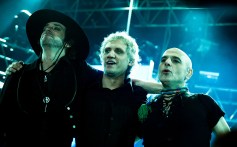
In 1995, the Argentine rock trio Soda Stereo returned to the studio after a three-year hiatus to record a brand-new album, Sueño Stereo (Stereo Dream), its seventh and final project. At the time, no one knew this would be the band’s farewell record. Its predecessor, Dynamo, was its most experimental and eclectic work, showcasing a complete turnaround of its new wave style over the previous decade. Sueño Stereo continued this exploration — an alternative album with a noticeable British influence, full of electronic sounds and violins, cellos and violas on many tracks.
Related
If Rock Is a Universal Language, Why Is Spanish Excluded From the Rock & Roll Hall of Fame? A Case…
09/05/2024
The 1990s brought a completely different flow from the ’80s new wave that made Soda Stereo famous. As the alternative rock movement gained popularity in the U.S. and Europe, listeners also increased in Latin America, and Soda Stereo embraced it and made the genre its own. After 10 years of working nonstop, releasing album after album and touring Latin America, the band decided to experiment and created an utterly progressive rock album that fans and other artists still praise 30 years later.
“Latin American rock DNA is partly based on a tremendous sense of inferiority because it always copied everything that was happening in England and the United States,” Ernesto Lechner, a music journalist from Argentina who has lived in the U.S. since the 1990s, tells Billboard. “Soda Stereo changed that.”
Soda Stereo revolutionized Latin rock history with their new sounds and exploration of diverse musical genres. That style would become the stamp of the lead singer Gustavo Cerati’s artistry, which he would perfect in his first solo album, Bocanada (1999), after Soda Stereo disbanded in 1997. Sueño Stereo, released on June 25, 1995, became the band’s magnum opus.
“Sueño Stereo, for me is, without a doubt, without discussion, Soda’s best album,” Lechner adds. “It’s a glorious record. A psychedelic rock album — electronic rock with moments of ambient music, a very sophisticated thing. It was like a full circle.”
“Is like the final masterpiece, very refined and perfect,” Valeria Agis, editor of Argentine newspaper La Nación, tells Billboard of the set, which in 2012 was ranked fourth by Rolling Stone in its 10 greatest Latin rock albums of all time.
Sueño Stereo’s journey begins with the alternative rock of “Ella Usó Mi Cabeza Como un Revólver,” a melancholy, complex track that presented a string arrangement of viola, violin and cello. A significant change also came with “Disco Eterno” and “Zoom,” two neo-psychedelic pop-rock songs on the set that became classics in the band’s repertoire.
Further into the album, The Beatles’ influence became apparent with the Britpop tracks “Paseando Por Roma” and “Ojo de la Tormenta.” The set concludes with a surprising shift in the last three songs, instrumentals in which the psychedelic sounds mash up with electronic ones.
For Soda’s bassist Zeta Bosio, it was the album that allowed him to keep going. A year before the release, his 2-year-old son Tobías had died in a car accident. “That was the album that brought me back to life a little, back to reality,” he tells Billboard. But it was also the album that brought the band back together as a family, allowing them to “become an organism where we could feel what the other was going to do.”
Drummer Charly Alberti felt it too. The album “presents us already at a really high musical level, the three of us,” he adds. “Things would come together really organically.”
Soda Stereo
Cecilia Amenábar
Within 15 days of its release, Sueño Stereo went platinum, making it an instant hit in Argentina and all over Latin America. Still, two years later, the band decided to end its 15-year journey together with the farewell tour El Último Concierto (The Last Concert), which culminated in a final show at the Estadio Monumental in Buenos Aires — a performance that left us not only with the live album and DVD of the same name, but also with Cerati’s iconic phrase “Gracias totales” (which literally means “total thanks” but does not translate perfectly into English).
Cerati took the time to focus on his personal projects. In 1999 he released Bocanada, the album he considered his official solo debut, although he had previously released two sets during Soda Stereo’s hiatus before Sueño Stereo. In this context, Bocanada, which means breath or puff, is used metaphorically to symbolize a “new breath of creativity,” as Cerati noted that the songs were coming to him very easily.
In 2007, Soda Stereo reunited for the Me Verás Volver Tour (You Will See Me Return), which took them all over Latin America and some U.S. states, including Florida and California. The trek began and finished at River Plate, Buenos Aires’ biggest stadium with a capacity of 70,000, where they performed six sold-out nights — five more than in 1997.
Soda Stereo was planning a few additional shows, even one in Spain, a market they never got to conquer. According to Bosio, the doors were open to doing more with the band. “The music was still intact. It was like we were entering a new stage of maturity and starting to understand things in a different way,” he says. “[But] being Soda Stereo always came with a lot of pressure. Especially for Gustavo, who was the main songwriter.”
In 2010, Cerati suffered a stroke after finishing a concert in Caracas, Venezuela, while promoting his last solo album, Fuerza Natural. He remained in a coma until his death on Sept. 4, 2014, at the age of 55.
But it was Sueño Stereo that prepared the ground for what came later. Sueño Stereo didn’t mark the end; it was the beginning of a new sound that still echoes 30 years later.
“One of our goals for this album was to take a subtractive approach,” said Cerati, as quoted in the book Cerati en Primera Persona(Cerati in First Person) by Maitena Aboitiz. “It was like saying: ‘Let’s pull back a bit’ — not to keep a low profile, but because we didn’t need to repeat the same thing over and over.”
Solo, Cerati had the freedom to do whatever he wanted, in his own words. With Soda, the exploration that began with Dynamo and that the band perfected with Sueño Stereo reached its highest point. The outcome was one of their most important pieces and one of rock’s greatest bodies of work, influencing artists all over Latin America and the world for years to come.
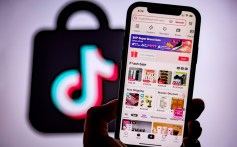
President Donald Trump on Thursday (June 19) signed an executive order to keep TikTok running in the U.S. for another 90 days to give his administration more time to broker a deal to bring the social media platform under American ownership.
Trump disclosed the executive order on the Truth Social platform Thursday morning.
Related
Third Time’s the Charm? Trump to Extend TikTok Sale Deadline Again
06/18/2025
“As he has said many times, President Trump does not want TikTok to go dark. This extension will last 90 days, which the administration will spend working to ensure this deal is closed so that the American people can continue to use TikTok with the assurance that their data is safe and secure,” White House press secretary Karoline Leavitt said in a statement on Tuesday.
It is the third time Trump has extended the deadline. The first one was through an executive order on Jan. 20, his first day in office, after the platform went dark briefly when a national ban — approved by Congress and upheld by the U.S. Supreme Court — took effect. The second was in April when White House officials believed they were nearing a deal to spin off TikTok into a new company with U.S. ownership that fell apart after China backed out following Trump’s tariff announcement.
It is not clear how many times Trump can — or will — keep extending the ban as the government continues to try to negotiate a deal for TikTok, which is owned by China’s ByteDance. While there is no clear legal basis for the extensions, so far there have been no legal challenges to fight them. Trump has amassed more than 15 million followers on TikTok since he joined last year, and he has credited the trendsetting platform with helping him gain traction among young voters. He said in January that he has a “warm spot for TikTok.”
“We are grateful for President Trump’s leadership and support in ensuring that TikTok continues to be available for more than 170 million American users and 7.5 million U.S. businesses that rely on the platform as we continue to work with Vice President Vance’s Office,” the company said in a statement.
As the extensions continue, it appears less and less likely that TikTok will be banned in the U.S. any time soon. The decision to keep TikTok alive through an executive order has received some scrutiny, but it has not faced a legal challenge in court — unlike many of Trump’s other executive orders.
Jeremy Goldman, analyst at Emarketer, called TikTok’s U.S situation a “deadline purgatory.”
The whole thing “is starting to feel less like a ticking clock and more like a looped ringtone. This political Groundhog Day is starting to resemble the debt ceiling drama: a recurring threat with no real resolution.”
That’s not stopping TikTok from pushing forward with its platform, Forrester analyst Kelsey Chickering says.
“TikTok’s behavior also indicates they’re confident in their future, as they rolled out new AI video tools at Cannes this week,” Chickering notes. “Smaller players, like Snap, will try to steal share during this ‘uncertain time,’ but they will not succeed because this next round for TikTok isn’t uncertain at all.”
For now, TikTok continues to function for its 170 million users in the U.S., and tech giants Apple, Google and Oracle were persuaded to continue to offer and support the app, on the promise that Trump’s Justice Department would not use the law to seek potentially steep fines against them.
Americans are even more closely divided on what to do about TikTok than they were two years ago.
A recent Pew Research Center survey found that about one-third of Americans said they supported a TikTok ban, down from 50% in March 2023. Roughly one-third said they would oppose a ban, and a similar percentage said they weren’t sure.
Among those who said they supported banning the social media platform, about 8 in 10 cited concerns over users’ data security being at risk as a major factor in their decision, according to the report.
Democratic Sen. Mark Warner of Virginia, vice chair of the Senate Intelligence Committee, said the Trump administration is once again “flouting the law and ignoring its own national security findings about the risks” posed by a China-controlled TikTok.
“An executive order can’t sidestep the law, but that’s exactly what the president is trying to do,” Warner added.
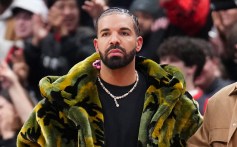
Drake is getting candid about his recent gambling misfortunes.
On Wednesday (June 18), the 38-year-old rap superstar took to social media to reveal the millions he’s lost through sports betting over the past month.
Related
Here’s What Drake Has to Say About the Dreaded ‘Drake Curse’ in Sports
05/19/2025
“Gotta share the other side of gambling…,” Drake wrote on his Instagram Story alongside a screenshot of his hefty losses. “Losses are so fried right now I hope I can post a big win for you all soon cause I’m the only one that has never seen a max these guys max once a week.”
According to the post, the Toronto MC placed nearly $125 million in bets over the past month, resulting in about $8 million in losses. While Drake didn’t detail which specific wagers led to the downturn, recent NBA and NHL playoff games have dominated the sports betting scene.
Earlier this month, he revealed a $750,000 bet on a cricket match, backing the Royal Challengers Bengaluru to beat the Punjab Kings. The post, which tagged gambling platform Stake — with whom Drake has an endorsement deal — is just one of many high-stakes wagers he’s publicly shared.
This isn’t the first time the OVO boss has taken a major hit. Earlier this year, Drake bet $1.25 million on the Toronto Maple Leafs to win game seven and advance to the Eastern Conference Finals — only for the NHL team to fall to the Florida Panthers.
“I am a flawed sports better,” he recently admitted in a mock interview on Instagram this while promoting his partnership with Stake. “I will not deny that. That’s not my gift. I’ll let everybody roll with it. I’m sure if you’re a Drake curse believer, there will be plenty more content in the future to confirm your theories because my slips do not cash out. But one day I’m gonna have a parlay that’s insane.”
Despite the recent losses, Drake isn’t backing down. In another IG Story post on Wednesday, he revealed an $800,000 bet on game six of the 2025 NBA Finals. With the Oklahoma City Thunder leading the series over the Indiana Pacers, Drizzy placed $600,000 on a Thunder win and another $200,000 on them winning by a 6–10 point margin. If both bets hit, his total payout would be an estimated $1.7 million.
In music news, Drake is rumored to be working on a new album, reportedly titled Iceman, which many fans expect to drop before the end of 2025. While the rap star hasn’t confirmed or denied any details about the project, fellow artist Smiley recently hinted that Drake has been putting in serious work on something new.
JENNIE had a pretty rough time taking on the infamous Hot Ones challenge.
During her appearance on the web series Thursday (June 19), the BLACKPINK star — who admitted early on that she doesn’t eat spicy food — began the episode with optimism, but ended up crying for help and running tearful laps around the table after facing the fiery spate of wings.
Related
A Complete List of BLACKPINK’s Solo Projects (So Far)
05/13/2025
“In my daily life, I have nothing — no spice in my life,” JENNIE told host Sean Evans at the top of the show. “I don’t like spicy food or anything to do with spice. If anything, I like things plain, but here I am, facing my fear.”
And face it she did. Things got painfully intense as the 29-year-old powered through the spice-laden challenge, following in the footsteps of her BLACKPINK bandmates ROSÉ and LISA, who had previously braved the wings of death in past episodes.
Between interview questions about her debut solo album, Ruby, songs she fought for on the project, the importance of skincare, hearing fans sing her lyrics at concerts, and being a hamster mom, the singer and rapper visibly unraveled with each increasingly scorching bite. “I think I’m allergic to spice!” she said at one point.
The heat hit a whole new level when JENNIE reached wing No. 8, featuring the notorious Da’ Bomb hot sauce. “This is no joke,” she said, desperately grabbing a napkin to fan herself. After taking a dramatic lap around the table, she reached for milk and ice cream while screaming in agony. “I can’t hear anymore,” she said, forcing a smile. “God, help me!”
After somewhat regaining her composure, Evans asked if JENNIE might be able to convince JISOO — the only BLACKPINK member who hasn’t yet appeared on Hot Ones — to take on the challenge.
“100%, because she is the one who taught me spicy and she’s the other you,” JENNIE replied. “Like she made me eat spicy food with her. Ever since we were trainees. So, I think [Jisoo] should come on this show. You’re gonna love it.”
Reflecting on her bandmates’ appearances, she added, “Whatever ROSÉ and LISA did, this is the real reaction. Because I watched their episode and they were so chill about it so I was like if they’re doing it, maybe I can do it too. But I can’t!”
Billboard’s rock album charts dated June 21 are topped by a pair of full-length releases new to No. 1 – though one is brand new while the other recently celebrated its 21st birthday.
Three Cheers for Sweet Revenge earned 44,000 equivalent album units (up 809%) in the United States in the week ending June 12, according to Luminate. That sum includes 37,000 album sales, spurred by the release of its 20th anniversary deluxe edition on June 6. For the reissue, the album’s 13-song original tracklist was remastered and remixed, while four live versions of the songs from BBC Radio 1’s punk show The Lock Up in 2005 were added. (All versions of the album are combined for tracking and charting purposes.)
Although the bulk of the album’s coronation was driven by album sales, Three Cheers for Sweet Revenge nonetheless tallied a 77% increase to 8.9 million official U.S. streams in the tracking week.
Three Cheers for Sweet Revenge logged previous history on all three charts (in fact, it ranked at No. 14 on the inaugural Top Rock Albums tally in 2006), but its original release preceded the inceptions of those rankings. The set debuted at No. 103 on the Billboard 200 dated June 26, 2004, but had never risen higher than No. 28 (Sept. 24, 2005) prior to its reissue, which sends it to No. 6, as previously reported. The LP generated a trio of Billboard Hot 100 entries, paced by the No. 33-peaking “Helena (So Long & Goodnight).”
As for Turnstile, Never Enough launches at No. 1 on Top Hard Rock Albums with 38,000 units, including 28,000 from album sales. It’s the band’s first ruler on the chart, exceeding the No. 2 peak of Glow On in 2021.
Never Enough also bows at No. 2, behind Three Cheers for Sweet Revenge, on Top Rock & Alternative Albums, Top Rock Albums and Top Alternative Albums and arrives as the band’s first top 10 on the Billboard 200 at No. 9.
The albums hold the top two spots on Vinyl Albums, too. Three Cheers for Sweet Revenge leads with 31,000 vinyl copies sold, followed by Never Enough (21,000).
Two songs from Never Enough concurrently debut on the Hot Rock & Alternative Songs chart. The title track leads at No. 42 via 1.5 million streams and 1.4 million radio audience impressions, with “I Care” at No. 49 (1.4 million streams). They mark Turnstile’s first appearances on the tally.
Eight songs from Never Enough also rank on Hot Hard Rock Songs, fronted by “Never Enough” at No. 7.
Lead radio single “Never Enough” hits a new No. 11 high on Alternative Airplay. Turnstile is seeking its third top 10 on the chart in as many tries, following “Mystery” and “Holiday,” which reached Nos. 8 and 10, respectively, in 2022.
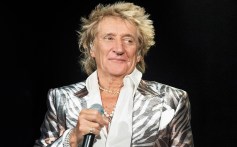
Rod Stewart Says He’s No Longer Friends With Neighbor Donald Trump: ‘He Became Another Guy…
06/18/2025
In a wide-reaching interview with The New York Times published Wednesday (June 18), the rock star criticized everything from the politician’s leadership to his effect on the social fabric of the United States. Springsteen is currently on his Land of Hope & Dreams Tour, on which he performs a setlist every night that he says “addresses our current situation” under Trump’s administration.
And how would Springsteen describe the current situation? “It’s an American tragedy,” he told the publication. “I think that it was the combination of the deindustrialization of the country and then the incredible increase in wealth disparity that left so many people behind. It was ripe for a demagogue. And while I can’t believe it was this moron that came along, he fit the bill for some people.”
Reflecting on Trump’s first few months in office since winning a second term, Springsteen added that “what we’ve been living through in the last 70 days is things that we all said, ‘This can’t happen here. This will never happen in America.’ And here we are.”
The Boss has long been vocal in his opposition to Trump, endorsing Kamala Harris in the 2024 election and telling The Atlantic four years prior that the twice-impeached POTUS was a “threat to our democracy.” Trump, however, hit back at Springsteen a few weeks ago after the rocker slammed his administration as “corrupt, incompetent and treasonous” during a May concert in Manchester, England.
“I see that Highly Overrated Bruce Springsteen goes to a Foreign Country to speak badly about the President of the United States,” Trump wrote on Truth Social shortly after the show. “Never liked him, never liked his music, or his Radical Left Politics and, importantly, he’s not a talented guy — Just a pushy, obnoxious JERK … This dried out ‘prune’ of a rocker (his skin is all atrophied!) ought to KEEP HIS MOUTH SHUT.”
The insults didn’t phase Springsteen, who has since continued to voice his dismay with the current state of affairs in his home country on stage. In late May, he released an EP featuring a recording of the speech that ticked Trump off.
And in his NYT interview, the Rock & Roll Hall of Famer didn’t shy away from criticizing Trump’s immigration policies, which in recent weeks have manifested in widely criticized ICE raids in places like Los Angeles. “There’s a large migrant population that lives and has altered Freehold in a very vibrant way,” Springsteen said of his hometown in New Jersey.
“There are communities all across America now that have taken in immigrants and migrant workers,” Springsteen continued. “So what’s going on at the moment to me is disgusting, and a terrible tragedy.”
Despite everything, though, the musician says he still has a lot of hope for the future of the country he’s spent his career writing about in his songs. Why? “Because we have a long democratic history,” Springsteen said. “We don’t have an autocratic history as a nation. It’s fundamentally democratic, and I believe that at some point that’s going to rear its head and things will swing back.”